
Our trip to Gdansk starts on September 11th with a guided visit to the European Solidarity Centre for members already there. The beautifully architected Centre consists of a museum and a bookshop dedicated to the history of solidarity and anti-communist opposition in Poland and Europe. It is a living symbol of the country’s struggle for freedom and democracy. Skilfully displayed, multi-media explanatory functions present, in a clever and modern way, the history and importance of the solidarity movement, not only for Poland, but also for the modern history of the whole world.
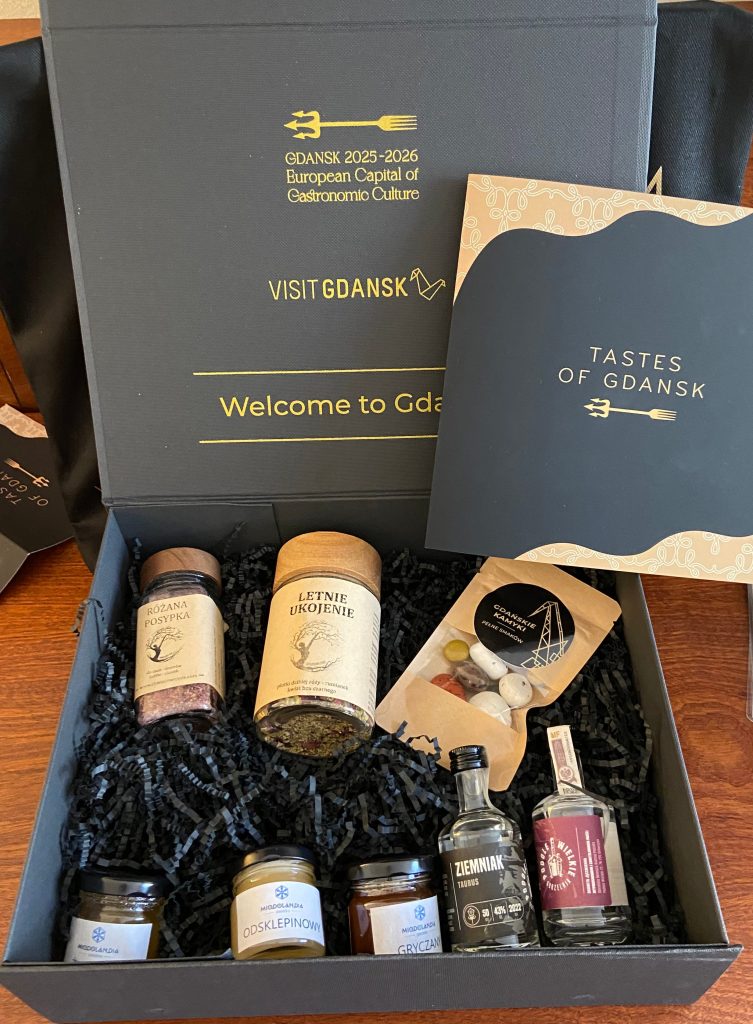
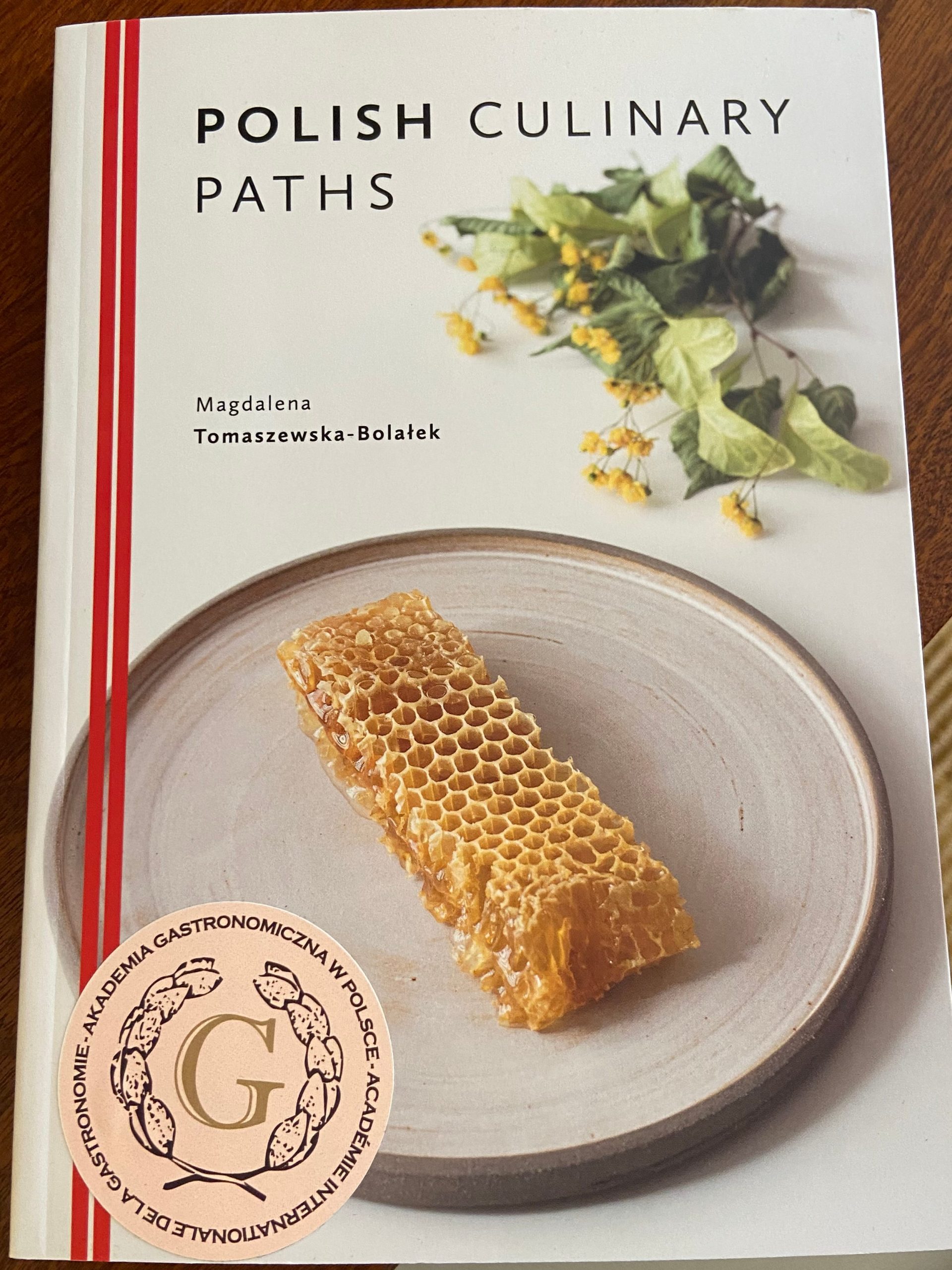
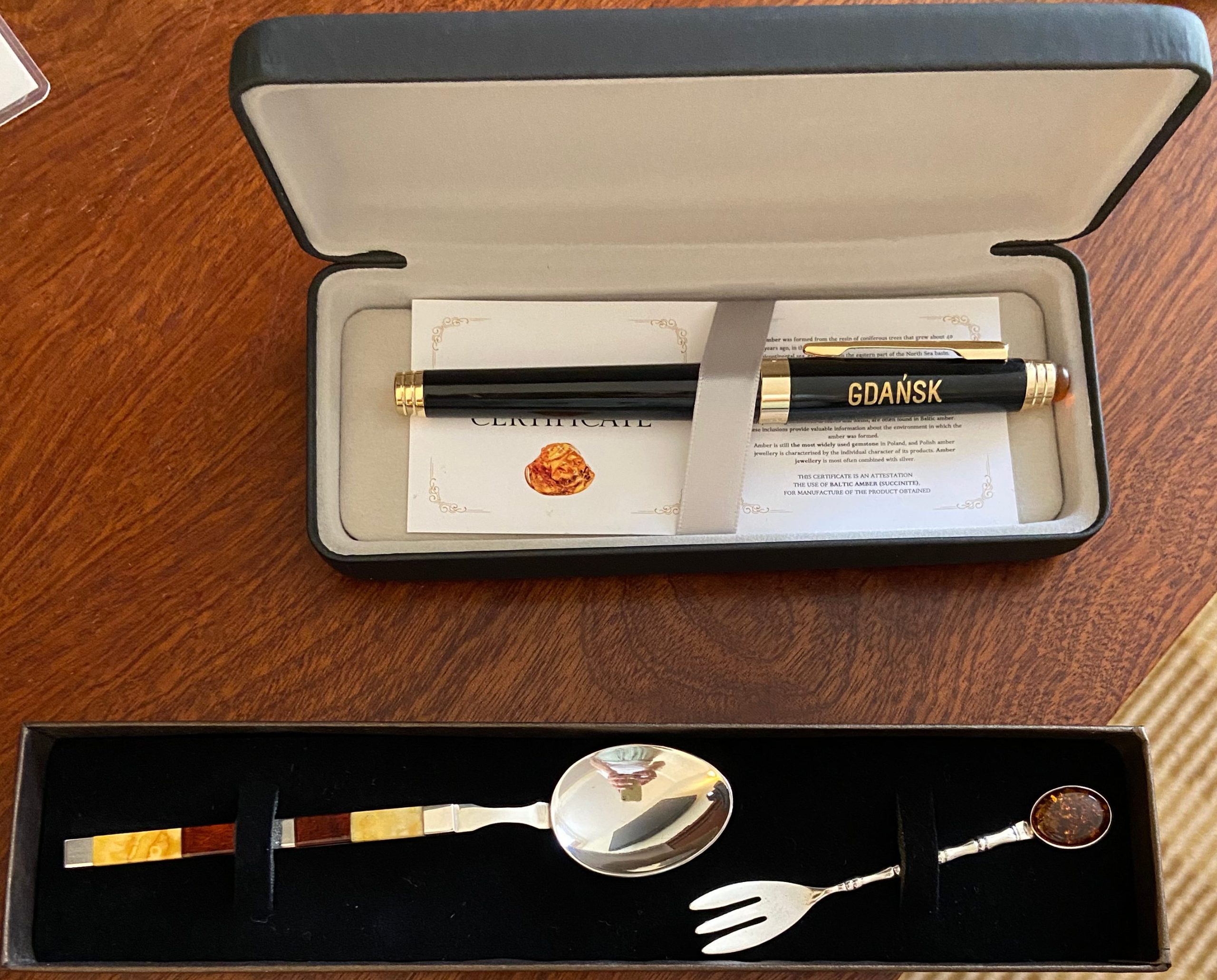
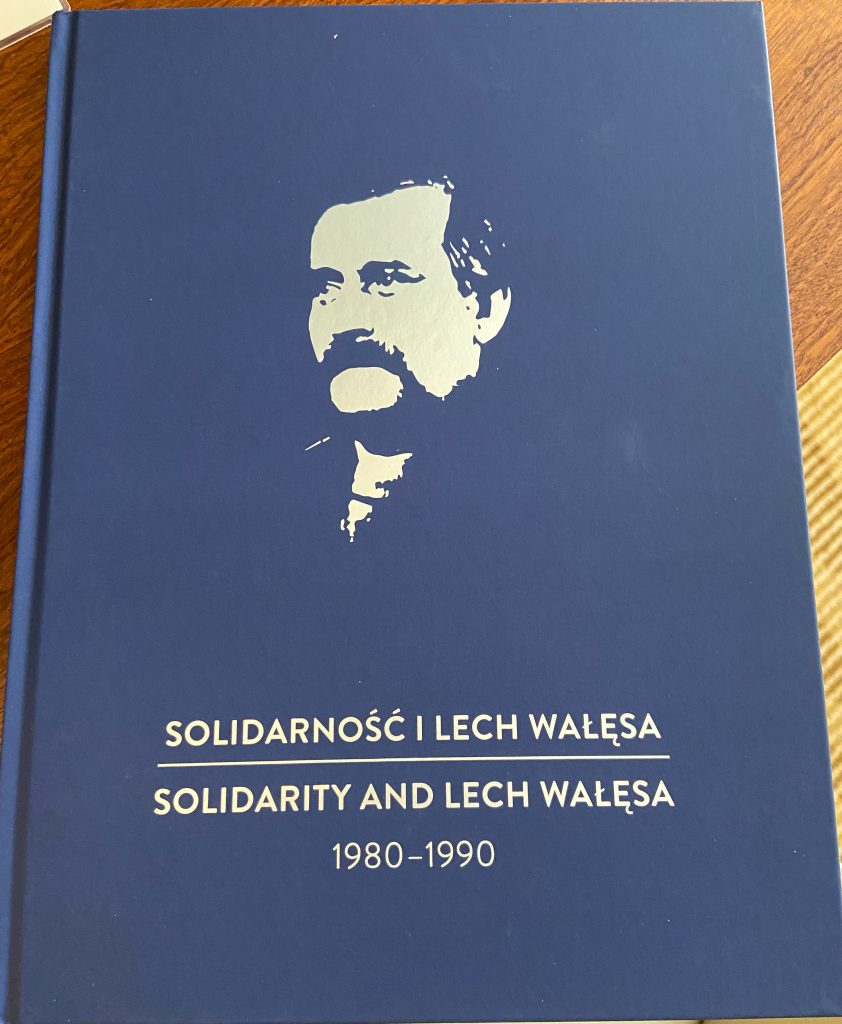
The 5-star Radisson Blu Hotel is located right in the centre of Gdansk. The nearby pedestrian street is full of restaurants and amber shops. In our magnificent room, a box Flavours of Gdansk, European Capital of Gastronomic Culture 2025-2026 with the drawing of the trident of Neptune and the teeth of a fork at the end of its handle. Inside: a jar of chamomile flower, wild rose and elderflower herbal tea, a jar of dried rose petals to sprinkle on cakes and desserts, two small bottles of vodka, one made from barley and the other from potatoes, three small jars of honey of different qualities and a bag of pebbles filled with apricot paste, anise or almonds under a layer of chocolate, a black shopping bag with the book “Solidarity and Lech Walesa 1980-1990” which traces back the solidarity movement that put an end to communism. It began with demonstrations by workers at the Gdansk shipyard who went on strike following the dismissal of an employee. Another book “Polish Culinary Paths” dedicated by the author — to the Members of the International Academy of Gastronomy (A.I.G.) — who has won several awards including the one for gastronomic literature granted by the International Academy of Gastronomy. A Gdansk pen with a Baltic amber cabochon at its end, a case containing a mini fork with amber at the end and a small spoon with a handle covered with two colours of amber, both in silver. Generosity and the pleasure of giving! The badges are also there with the miniaturized program on them!
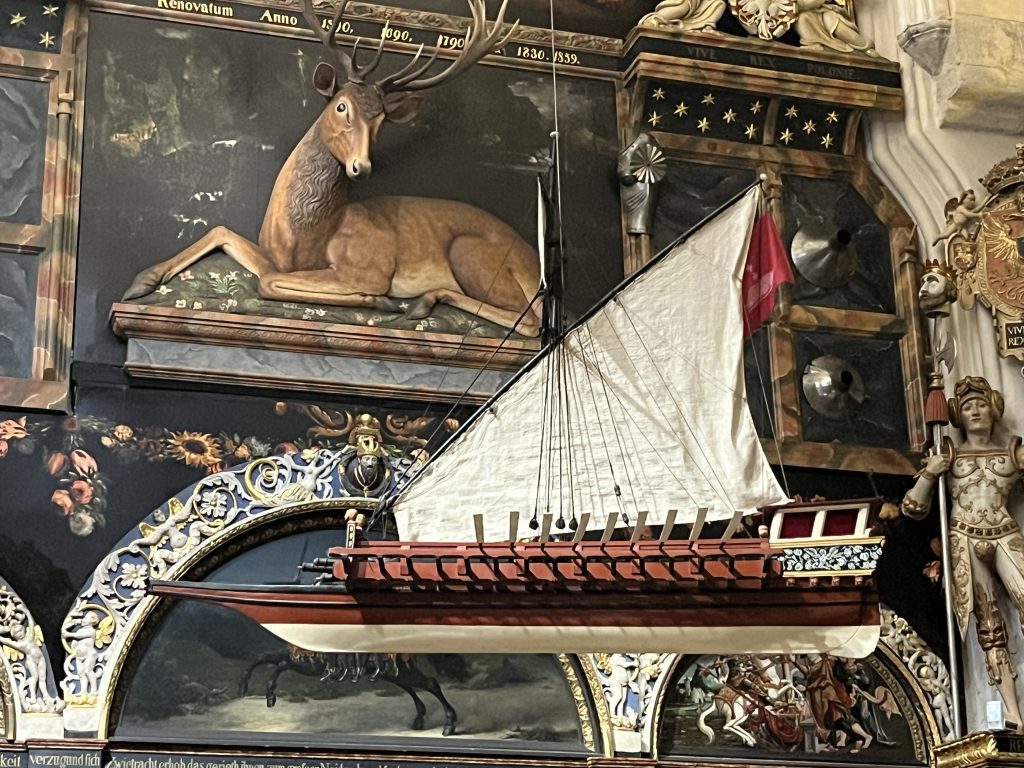
In the evening, we walk 200 meters to Artus Court, the historical building that served as a meeting place for merchants and a centre of social life. Today, it is a branch of the Gdansk History Museum. Our gala dinner takes place in a superb ballroom richly decorated with reproductions of maritime vessels in suspension. Champagne as an aperitif. Black tablecloths and seats covered in black fabric, waiters also in black and tables centred by floral arrangements, fine Gerpol cutlery. Quartet of female musicians. Maciej from the podium: “Once again, we celebrate the presentation of special A.I.G. awards for 2025. Gdansk has been nominated European Capital of Gastronomic Culture 2025-26. We greet Fabien, Jacques and Naji. Dinner is prepared by two talented Chefs, Cheffe Beata Śniechowska, winner of the Chef of the Future 2025 award and Chef Jacek Koprowski, winner of the Chef of the Future 2024 award. The wines have been carefully chosen, sommelier Jarosław Baranowski is the winner of the 2025 Sommelier Award. There is no more sincere love than the love of eating.“
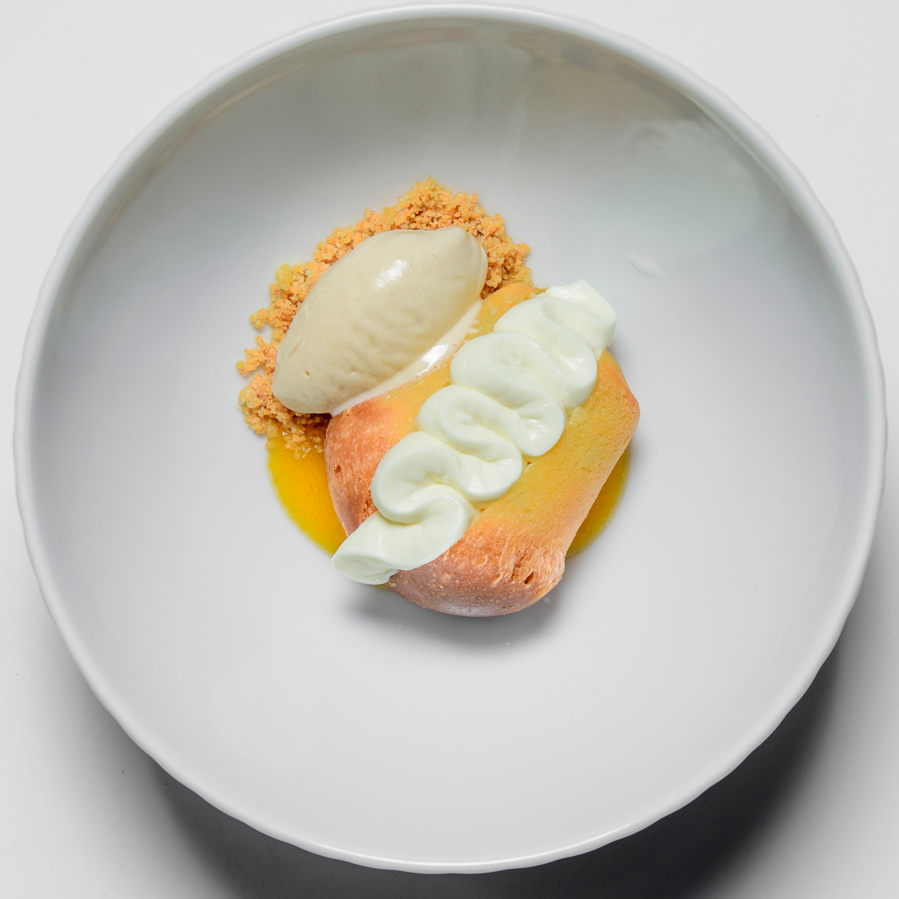
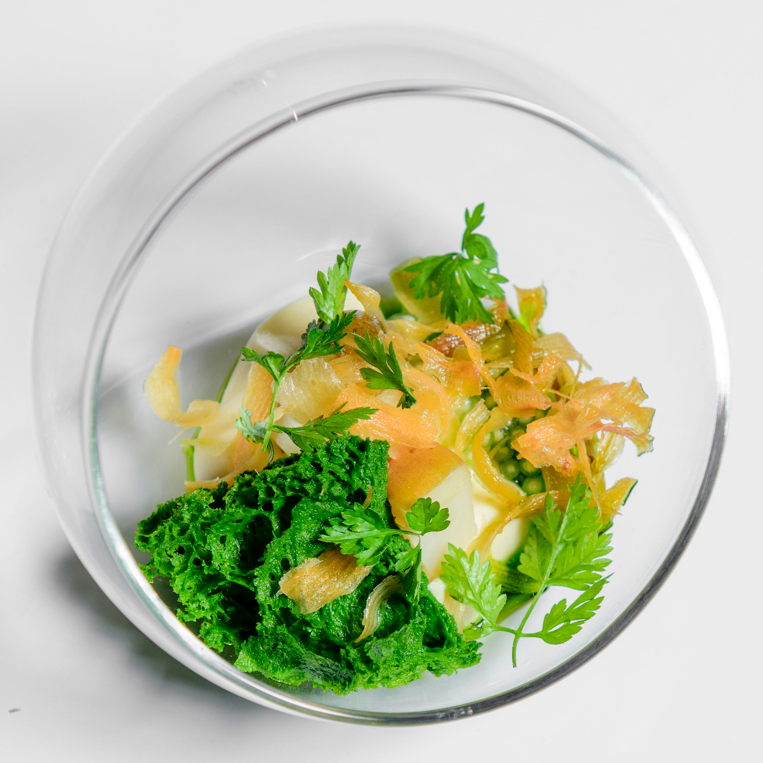
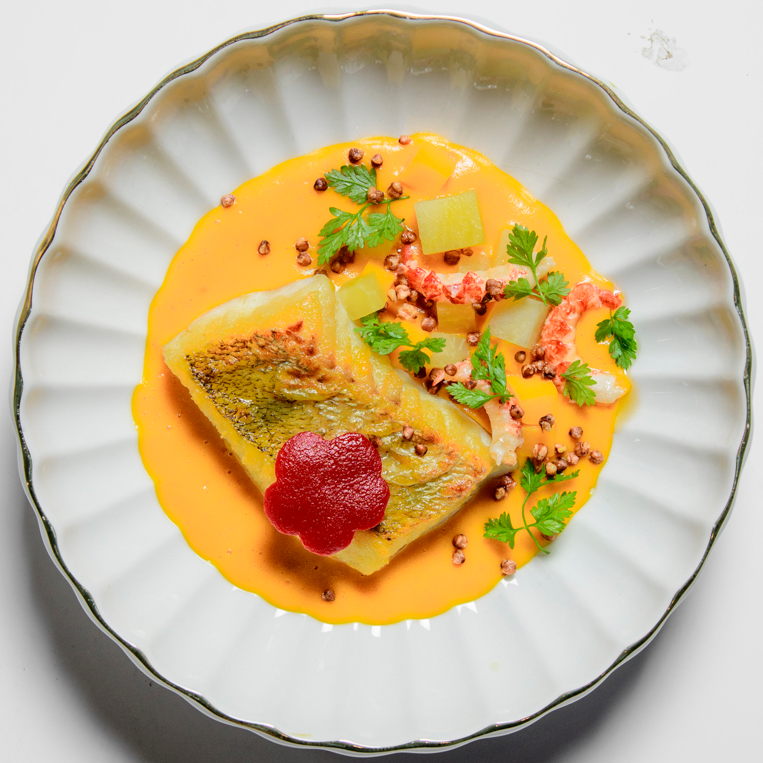
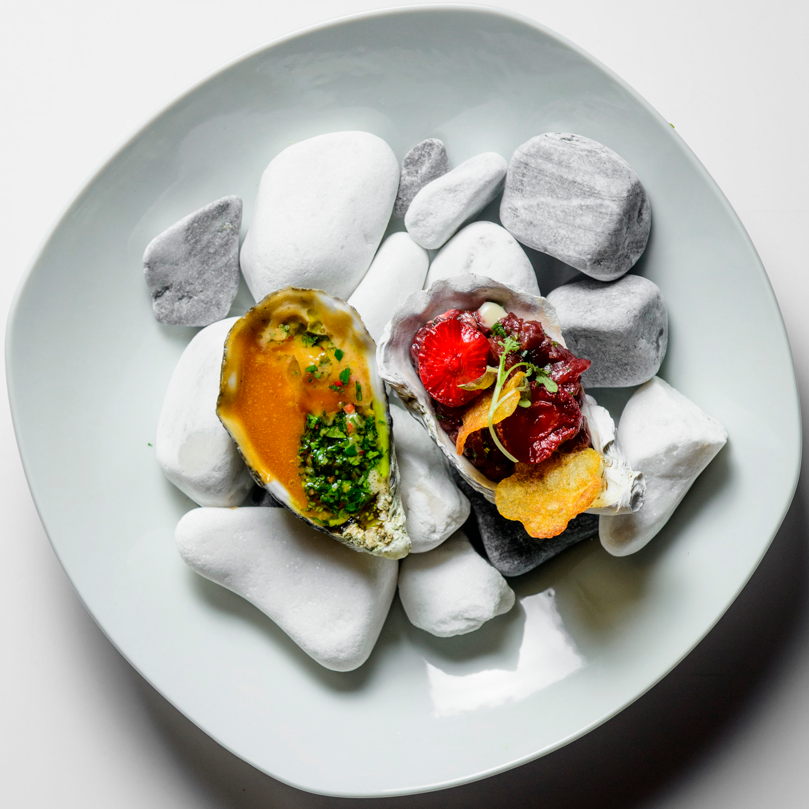
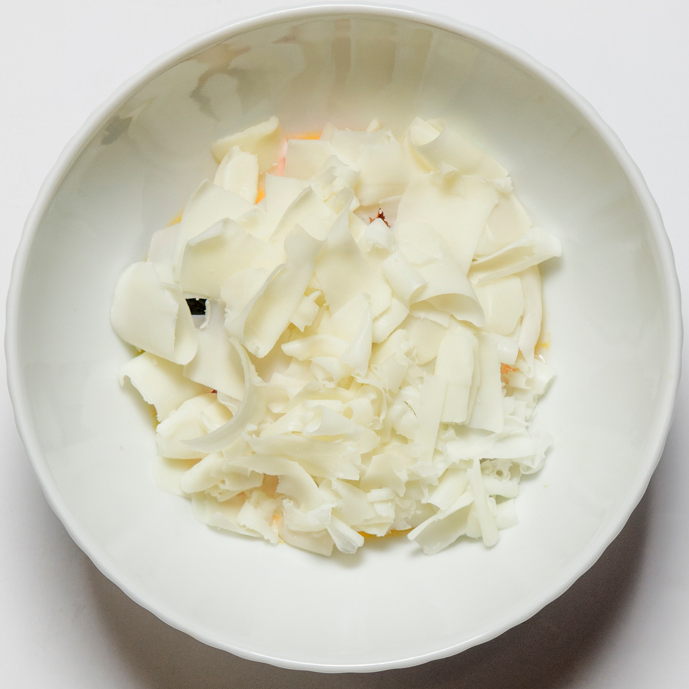
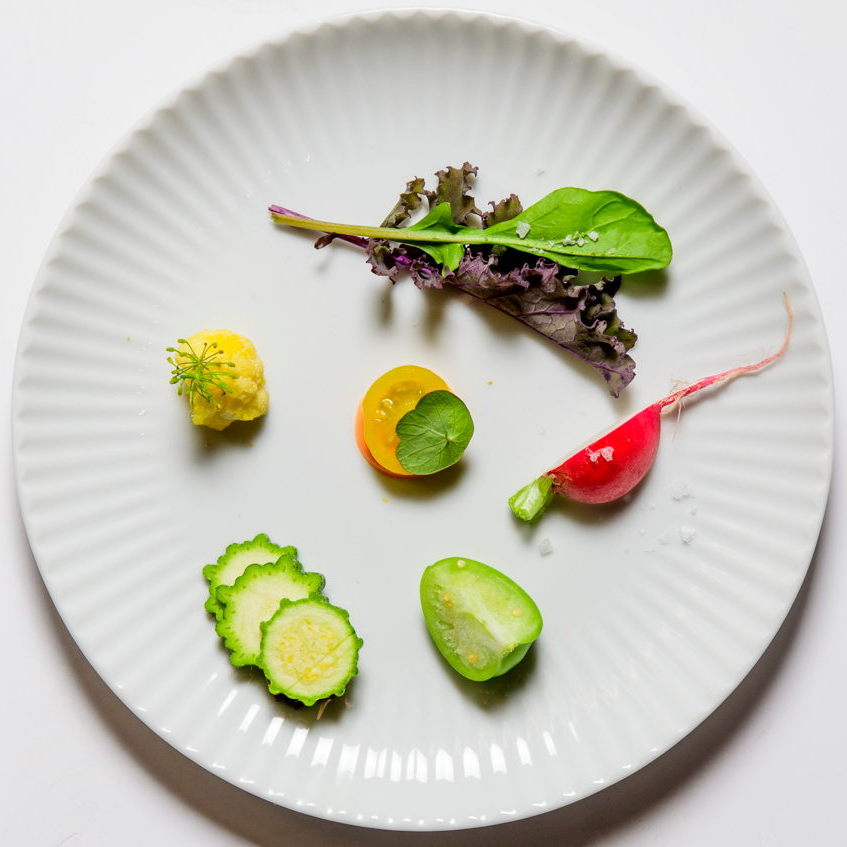
The mayor of Gdansk welcomes us. Maciej and Jacques present the award of Chef of the Future 2025 to Beata, the Sommelier prize, the Pastry Chef prize, the literature prize, the Polish gastronomy prize, etc… Fabien finally arrives after a long plane delay! Fabien: “Great progress has been made in Poland.” Maciej thanks him. The first three courses are fresh plates made of vitamin-rich vegetables. Vegetable verrine on green moss. Pickled cauliflower, tomatoes, red pepper purée, cucumbers, radishes. Tomatoes, redcurrants, red pepper purée, cheese shavings. Baskets of various breads, mustarded butter in the shape of a pâté. On large pebbles is a duo of shells, one with a cooked oyster and the other with raw beef marinated in orange juice. Pike-perch fish on a pumpkin purée, mini shrimps, pickled vegetables in dices. Cream-filled baba with beer ice cream. The wines are well chosen. Maciej calls the Chefs and Jacques gives the review: “Excellent dinner, very good sommelier. You two fully deserve the Chefs of the Future awards. It was a complex cuisine, the beef and oyster was a challenge based on exceptional ingredients. Fantastic tomatoes. Thank you very much!“
Friday 12th: Maciej calls the roll in the lobby and we get on two mini buses. There are members from various countries. Departure at 9 am for the Antonius Caviar farm near Olsztyn, producer of Polish sturgeon caviar known for its superior quality and sustainable farming methods. Antonius Caviar operates cattle farms located in idyllic landscapes in the Polish Lake District. Antonius Caviar was the official partner of the 40th anniversary of the A.I.G. in Paris in 2023.
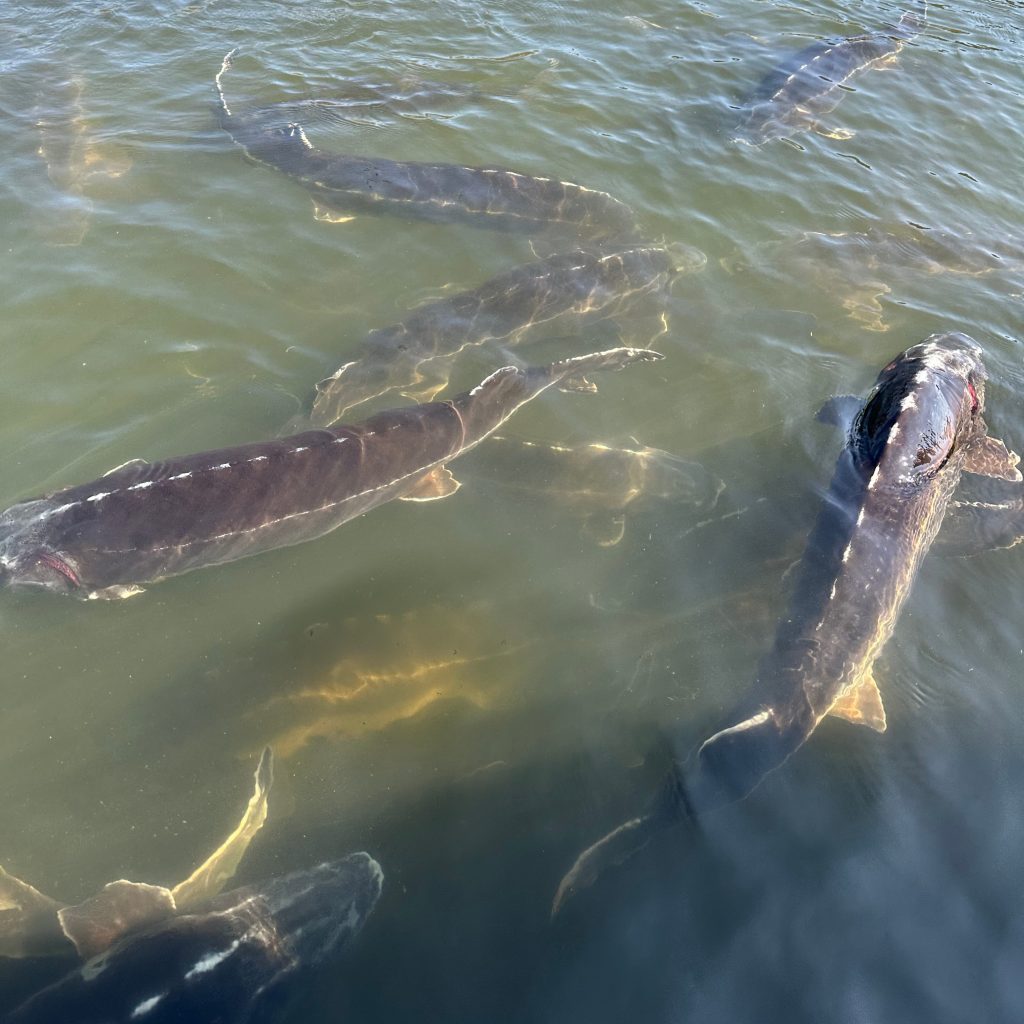
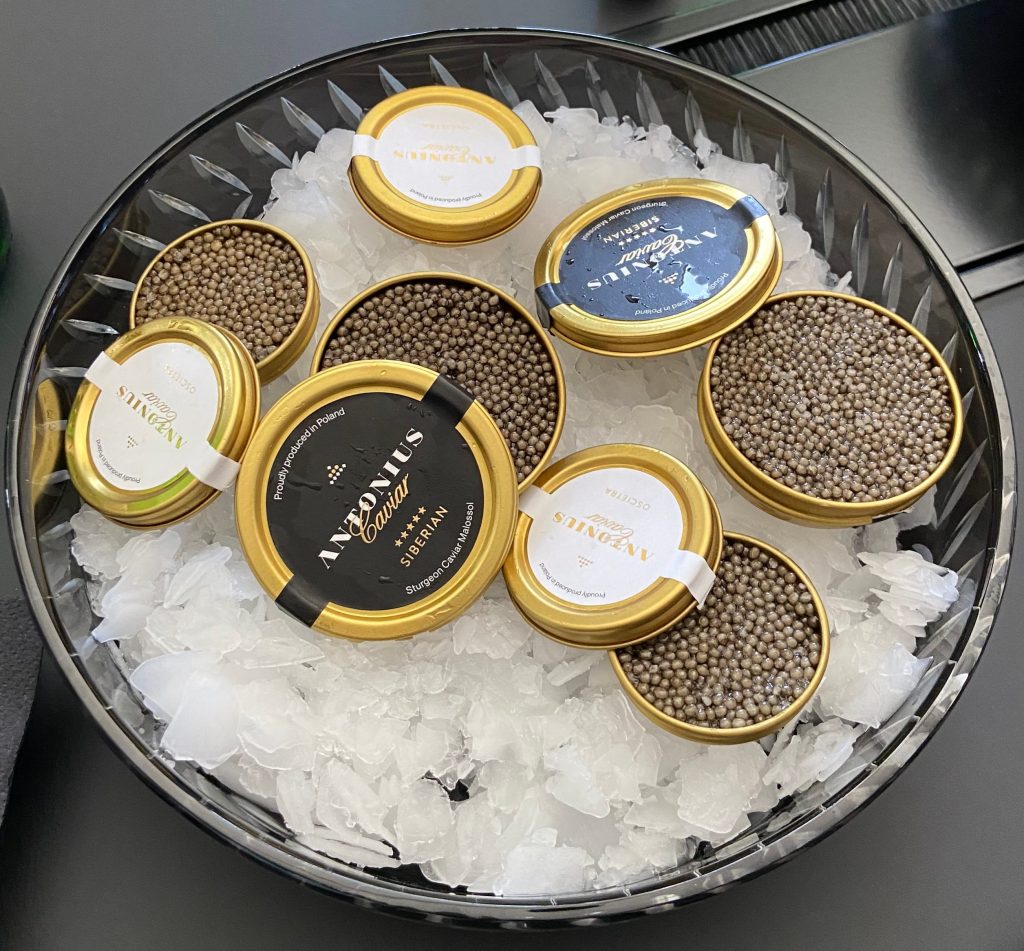
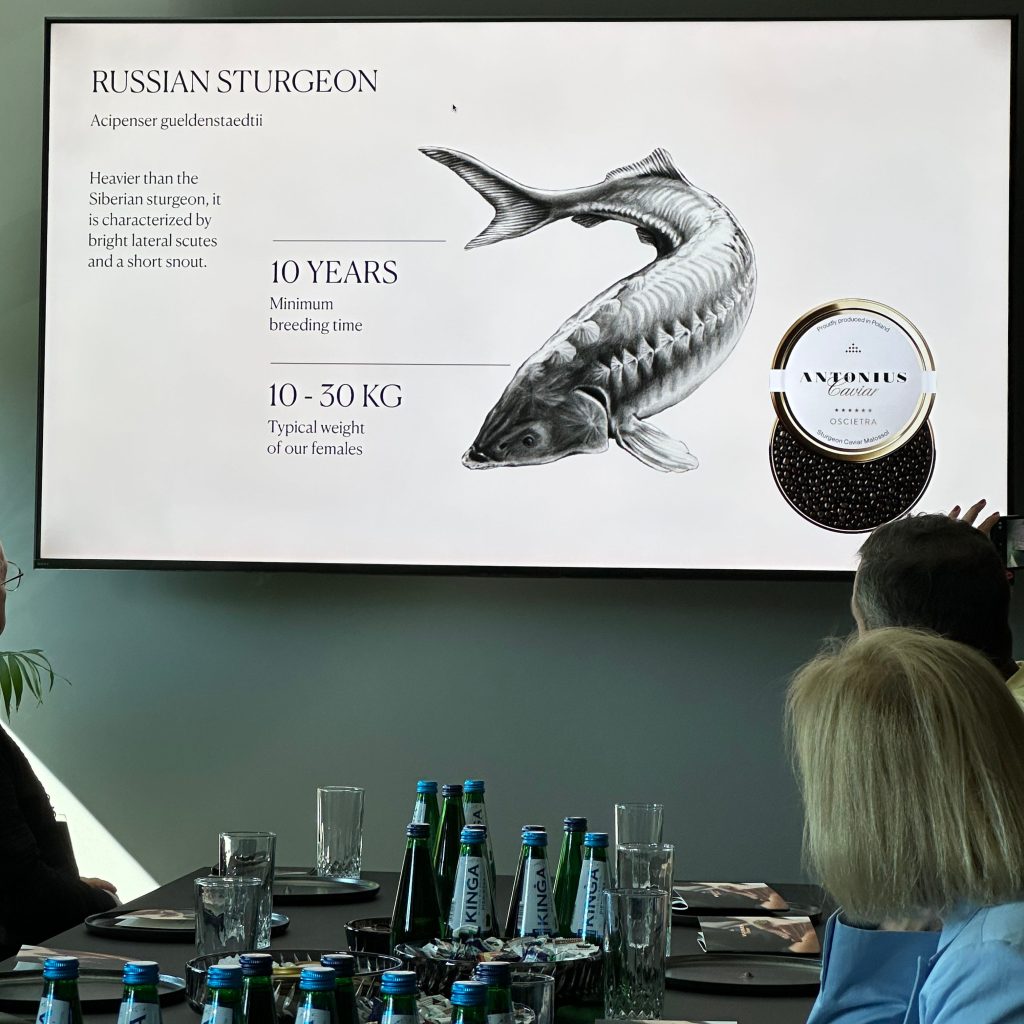
VIP tasting room, we sit around a large table with plates and variety of Polish chocolates, explanatory brochures on caviar in French. The manager gives us a very professional presentation in French while information is projected on a screen on the wall. Antonius Caviar is a family business founded by Antoni Łakomiak whose fishing tradition dates back to the 1960s. It is the leading producer of caviar in Europe and the second in the world after China, followed by France and Italy. Started in 1992, sustainable livestock farming is Poland’s green lungs. Red eggs (salmon or trout) are not real caviar. Only sturgeon eggs are. The caviar is fresh, unpasteurized and melts delicately in the mouth. In sturgeon, sex is defined at the age of three years. It takes eight to ten years for Siberian and Russian sturgeon females to reach the maturity required to produce caviar. Maturity of Beluga females take 25 years. The gonad is the pouch containing the eggs. The boxes of different qualities of caviar are placed on ice. Tasting on the top of the wrist between the thumb and index finger and then on slices of buttered baguette. There are four species of caviar, the Russian, the Siberian, the baeri and the beluga bester albino. The colour of the eggs varies according to the species and genetic characteristics of the female, ranging from black to grey, brown, olive green or golden. It is a food rich in vitamins, proteins and minerals, with ossetra caviar being the most nutritious. There are four livestock farms in Poland. Only one laying per female. A documentary film on the creation of the farm is screened. Walk to the rearing tanks, in order of growth, from the smallest to the largest fish. The last step is the purification tanks to eliminate fat, which are always exclusively female fish.
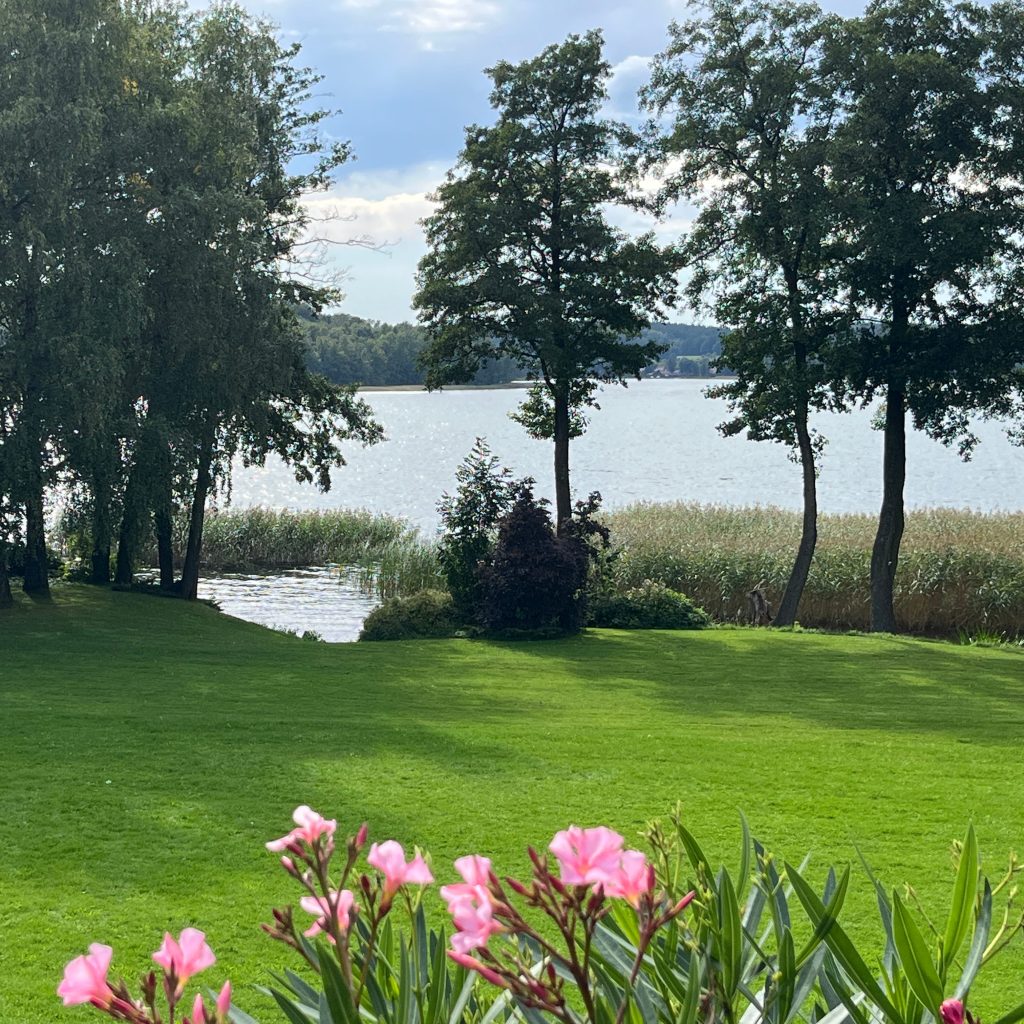
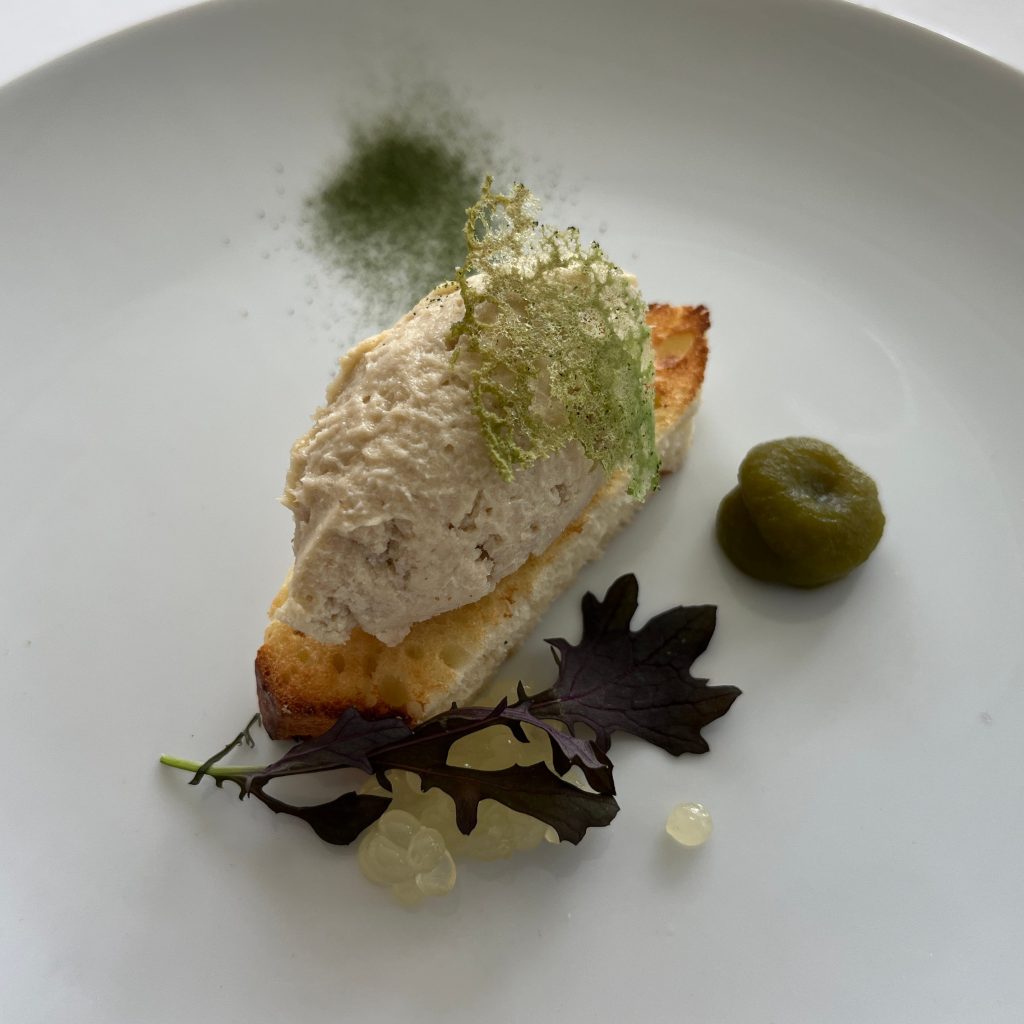
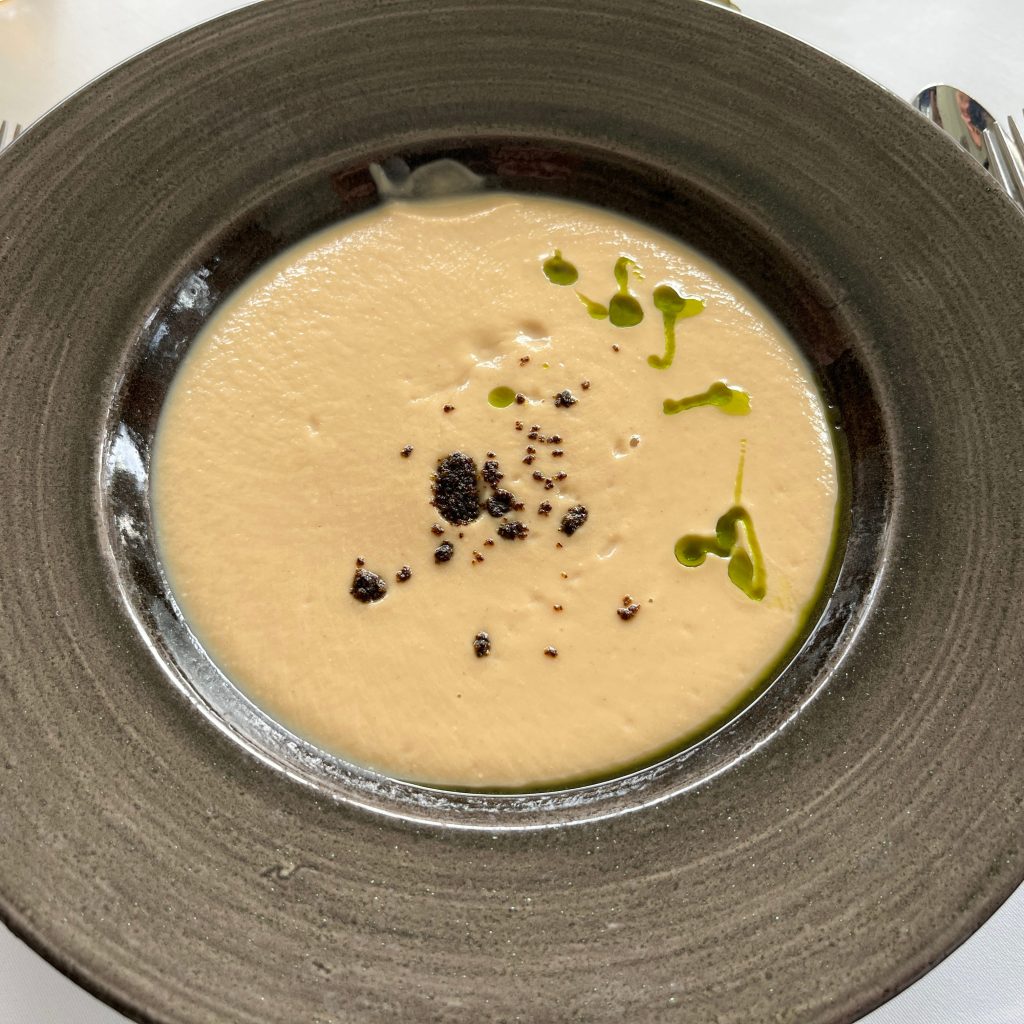
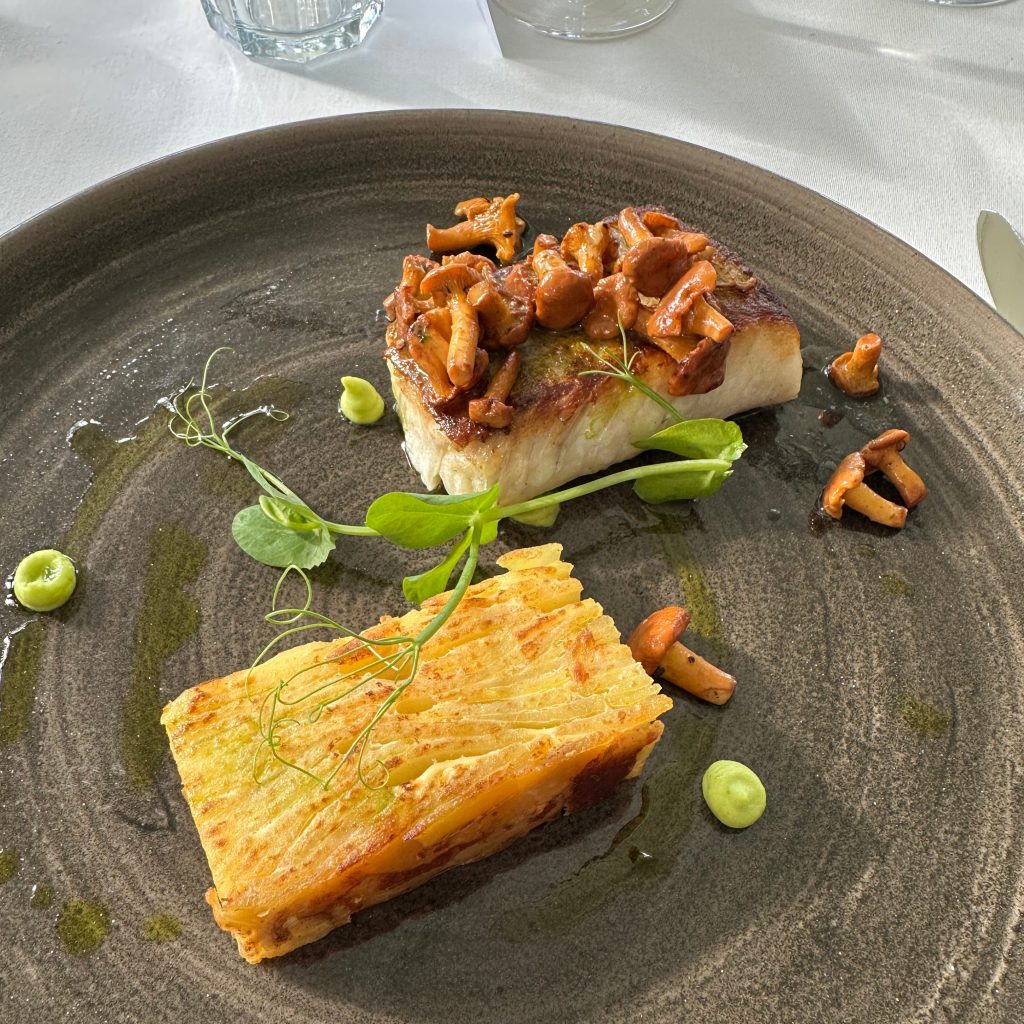
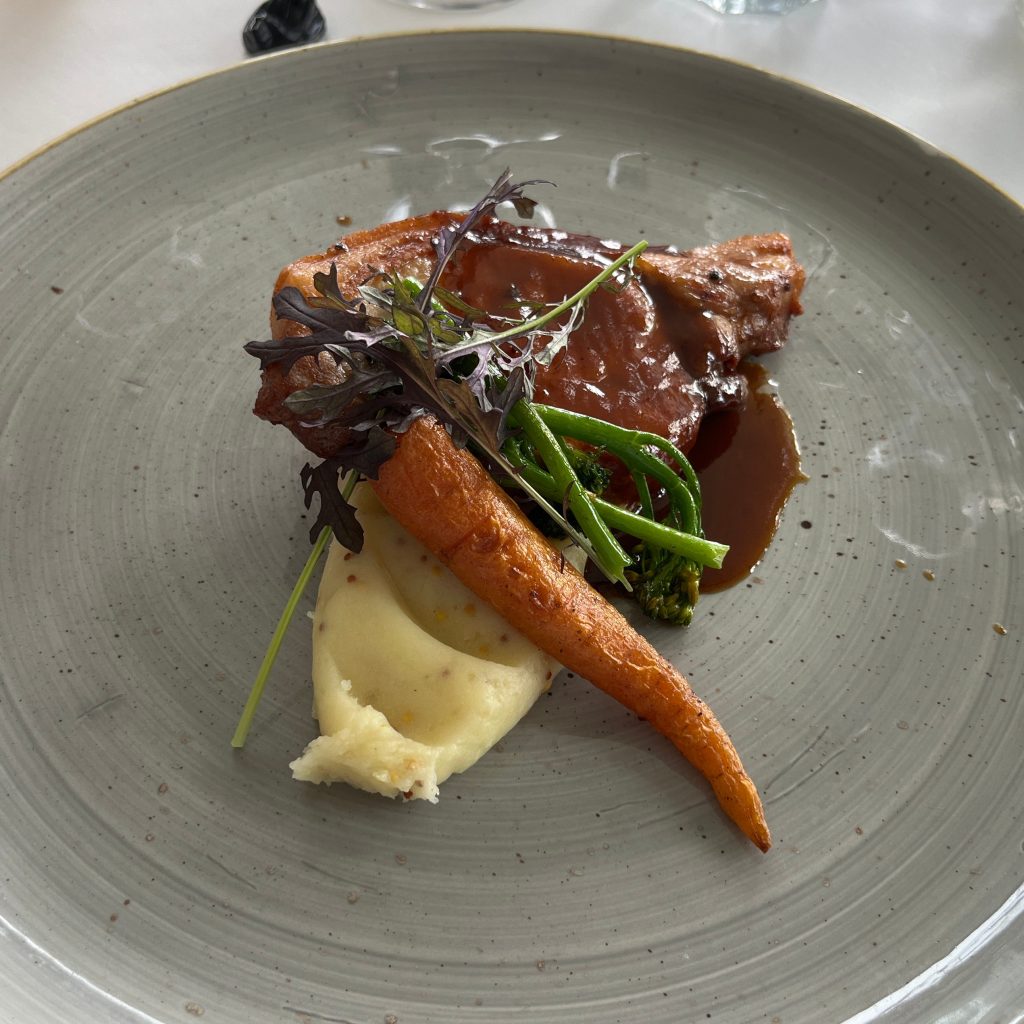
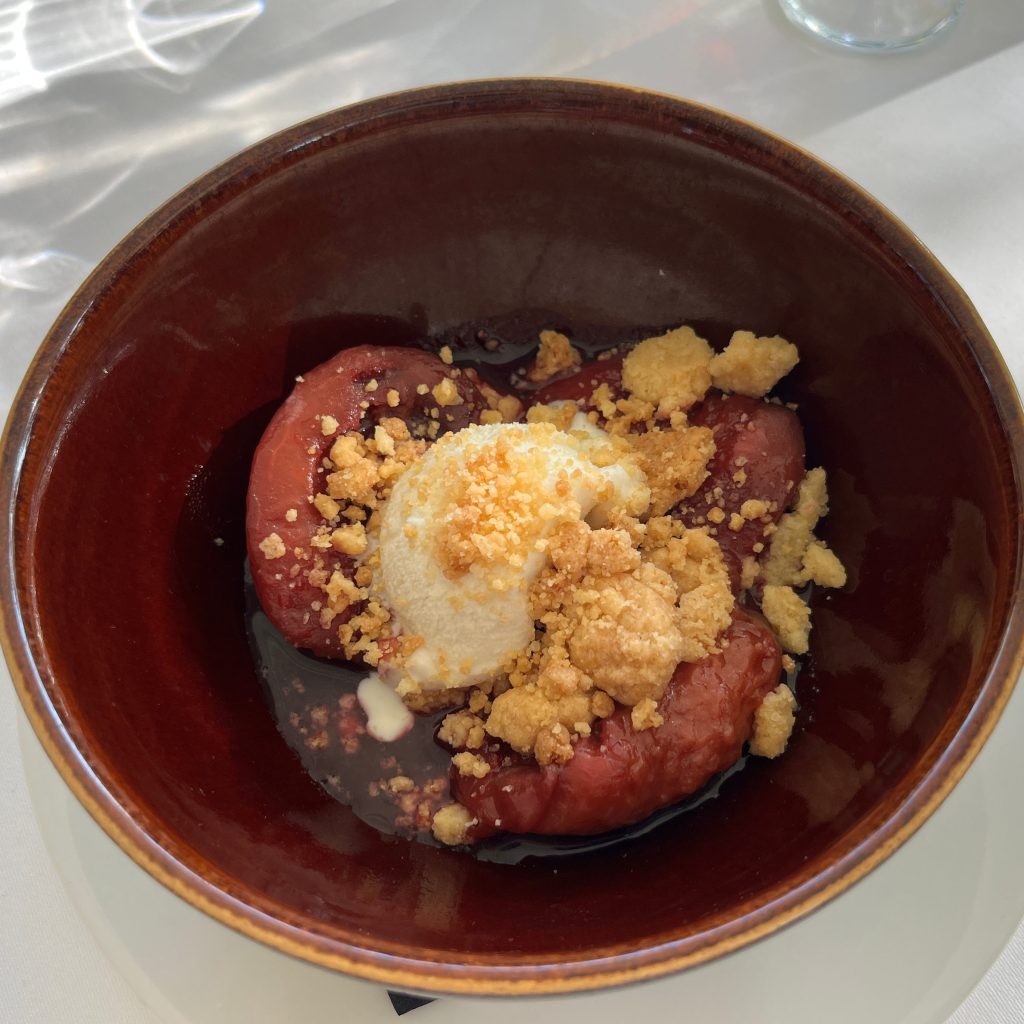
Bus to the Między Deskami restaurant by the lake which offers local cuisine. Maciej: “Kasia and I chose the menu, no wine but local cider and apple juice.” Bay windows to the garden and lakeshore. White tablecloths, vases of white flowers. The weather is magnificent, the sun shimmers on the lake. Chef Lucas: “I’m going to cook for you. Apple trees can reach 100 years of age, there are two kinds of apple juice, sweet or sour. Two different beers, light and heavier“. Smoked fish pâté on brioche bread, pickle, dill gel and powder, lemon caviar, good. Soups of your choice: sturgeon soup or roasted cauliflower soup with caviar grains, leek powder and croûtons. Everything is very good. The main course is also to be chosen: fish fillet, gratin dauphinois, chanterelles, dill oil or wild boar steak with cider sauce and creamy honey mustard seed purée, wild broccoli, candied carrots. The decoration is very fine and omnipresent in each dish. It is a family affair with bee breeding and natural liquors. Refreshing Dzika quince cider and cherry. Maciej: “There is no more sincere love than the love of eating and drinking well. Thank you for always being punctual, there are two days left, the atmosphere will develop for the best. Thank you Thomas! Applaud the Chef“. Dessert consists of local prunes in red wine and delicious yoghurt ice cream with cardamom, at the bottom of a crunchy crumble. Maciej thanks the Chef for the kilometre zero ingredients. The buses leave at 16.15 pm.
At 7:30 p.m. walk to the Michelin-recommended Tygle Gdańskie restaurant. Glass of Polish gin with smoked prune, sailors drink, ancestor of gin. Aperitif of your choice: red wine or gin. Dinner is prepared by Chef Michał Stężalski, winner of the A.I.G. prize, Chef of the Future Award 2020. Plate of three starters: beef tartare on a tartlet, herb mayonnaise, Antonius caviar, asparagus; trout ceviche with green apple on shrimp chips, candied pineapple, fennel and salmon roe; Cheese ball covered with beetroot on black bread, like a pomegranate. Soup of your choice: either a crayfish soup with trout, fish dumpling and red caviar or a delicious cappuccino of boletes, hazelnut and nutmeg blossom, delicious orange alcohol made especially for students. Three main courses to choose from as well. Antonius sturgeon fillet cooked in a cream of pickled cucumbers, crayfish, cucumber slices, Antonius caviar; duck breast with liquid foie-gras, roasted apple and black pudding, fermented beetroot; celery and mushroom risotto, Polish black truffle, peanut butter with 24-month-old Bursztyn cheese. Dessert to choose between a Belgian chocolate mousse with espresso and salty crunch, cocoa powder such as a sea urchin or a lemon sorbet with gold leaf and edible amber pieces, mint leaves, all under stems of crystalised sugar. Goldwasser liqueur. On a wooden plank, marzipan in the shape of potatoes. A legend is told to us: Neptune, furious that people did not put gold coins in the water, whipped it with his trident and the water turned into alcohol.
Maciej: “I need 3 minutes of your time. Naji, the floor is yours, the Chef is here and the team is here.” Naji: “I can only praise this dinner, the alcohols as an aperitif were exceptional, the Machandel terrific, the crayfish soup, the boletes soup very good. The sturgeon a little dry but very good sauce, the brandy went well with it and the risotto a treat. The chocolate dessert sensational as well as the lemon sorbet. Liqueur then digestive“. Fabien: “We warmly thank the Chef and his team. Yesterday evening, Poland joined the international scene, gastronomy is outstanding in Poland. Sincere congratulations, those present came from all over the world.“
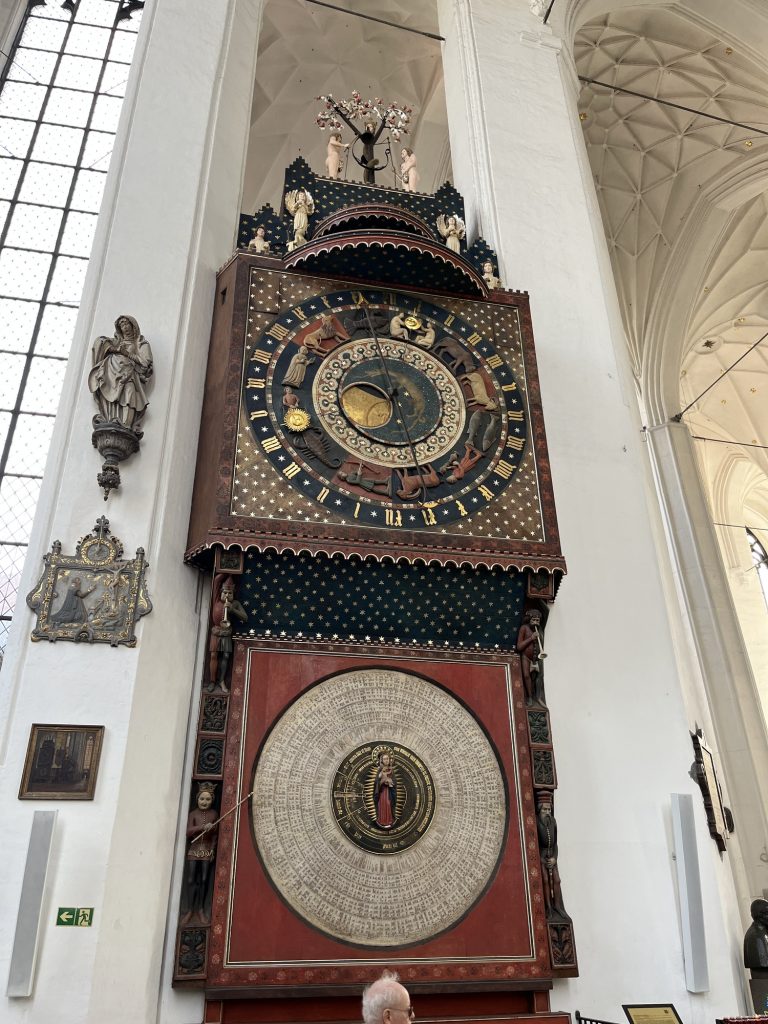
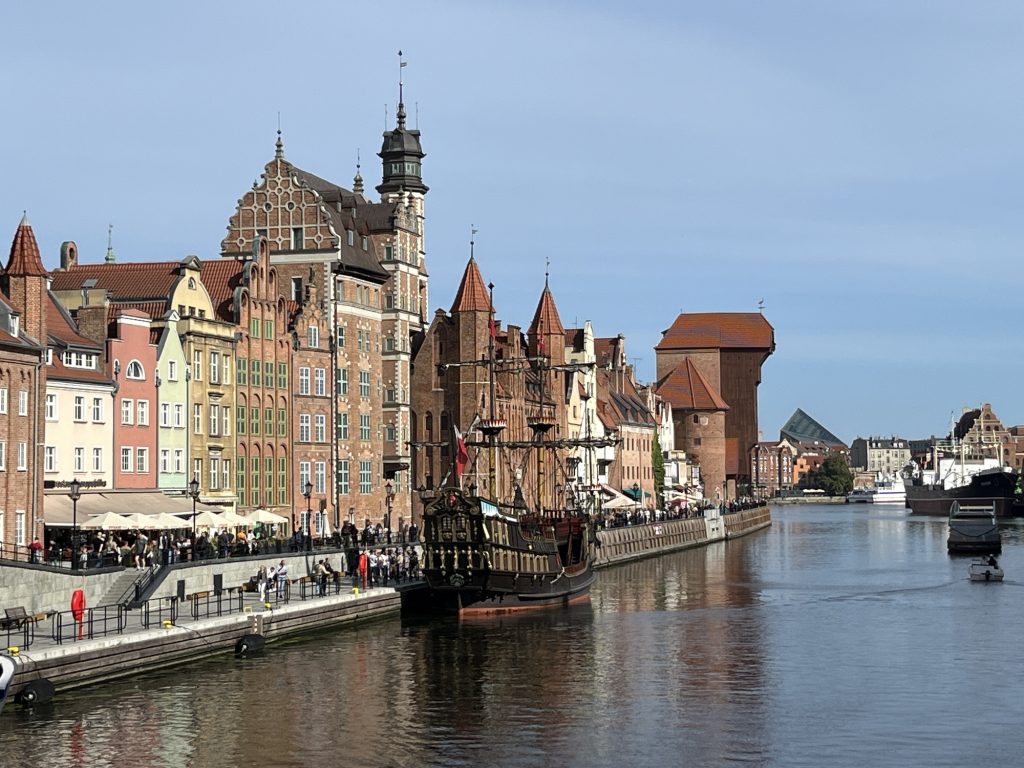
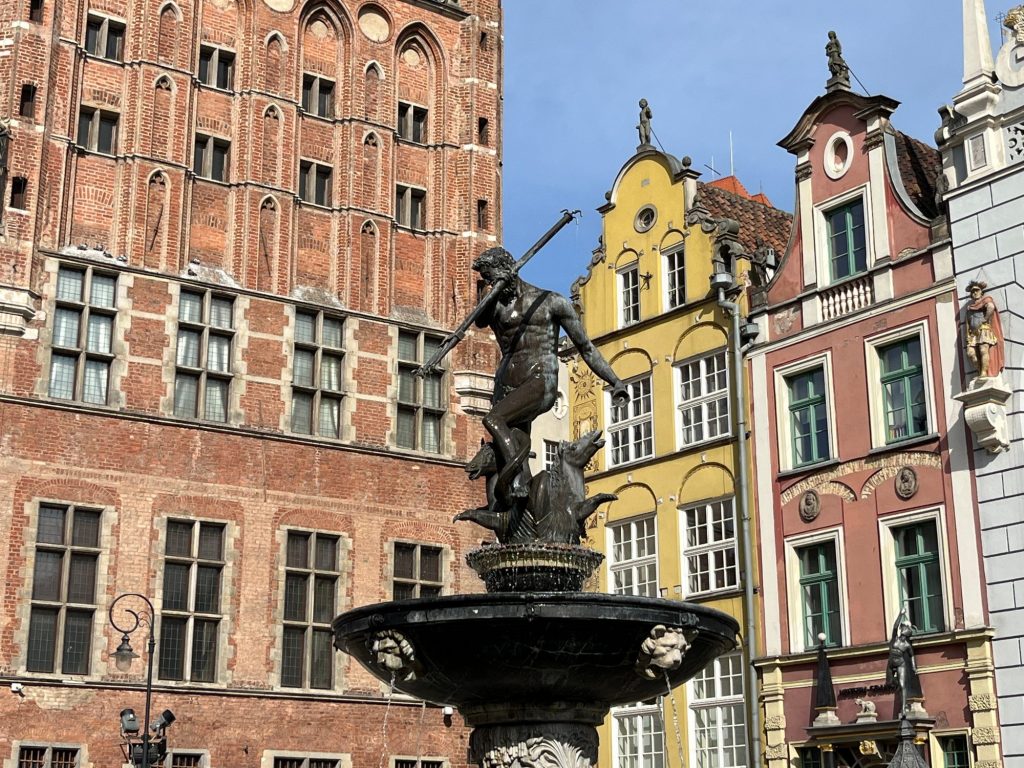
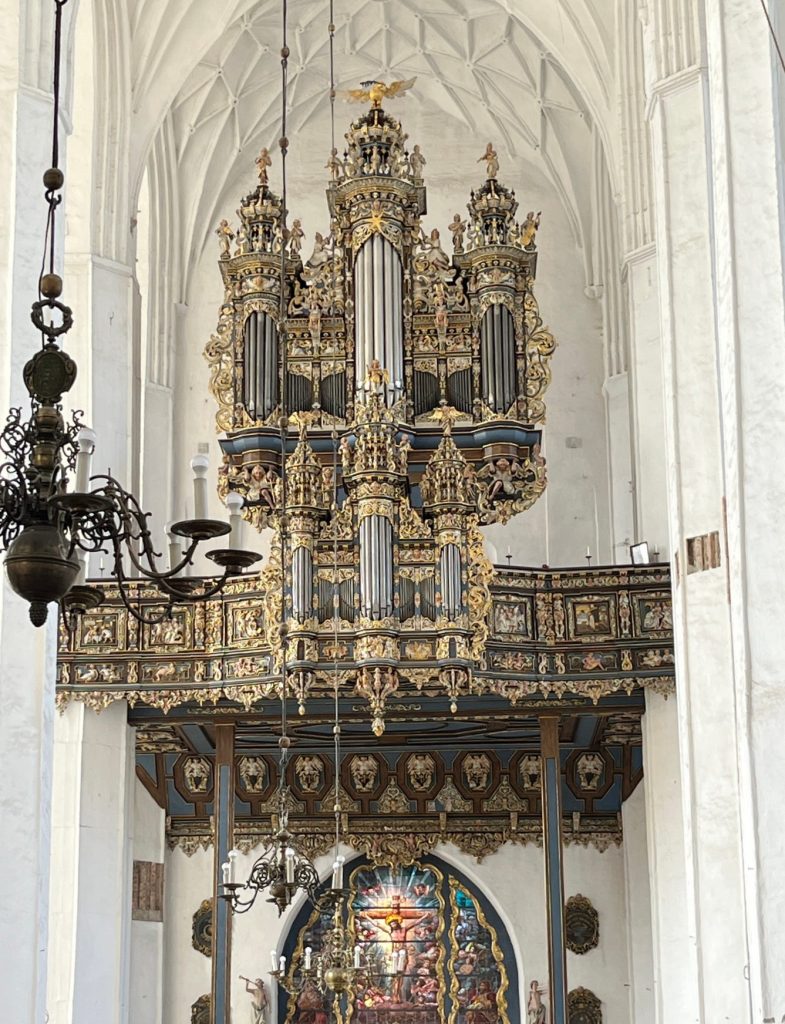
Saturday 13th: we are divided into two groups with guides and headphones to explore the old town that is more than 1000 years old. Beautiful church where a bishop baptized people in 997. Motława River, the Vistula River. The historical fountain of Neptune which represents the God of the sea. The medieval port with Granary, the attic island, goods warehouse area. At night the drawbridges were raised and dogs were released. Medieval ramparts, green bridge. Castle of the Teutonic Knights who seized Gdansk, later returned by the city’s inhabitants. Medieval crane, lifting machine. Long Market Square (Długi Targ). Coats of arms, lions with two crosses, eagle, crown, Prussian eagle, partition of Prussia at the end of the eighteenth century. Mr Farenheit, inventor of the thermometer, was a native of Gdansk. Mr Van den Mensk, grain trader. Goldwasser is a yellow liqueur (22 or 23 carat gold flakes). Hidden basin, Neptune transported elsewhere, Artus Court (King Arthur) in Gothic style. Mariacka Street (from Marie). The construction method is as follows: wooden piles, planks and then stones, brick buildings. Presbytery, Basilica of St. Mary, the largest brick church in Europe with a capacity of 25,000 people. Organ case. A charity party was held there in 2019 during which Paweł Adamowicz, the mayor of the city, was fatally stabbed. Medieval polychrome paintings. Astronomical clock, with a single hand and the signs of the zodiac in front of the numbers. Piwna Street (beer brewers). A 40-kilometre canal, dug by the Teutonic Knights, supplied the city with water in the middle of the fourteenth century. A concert of chimes that we hear from the street.
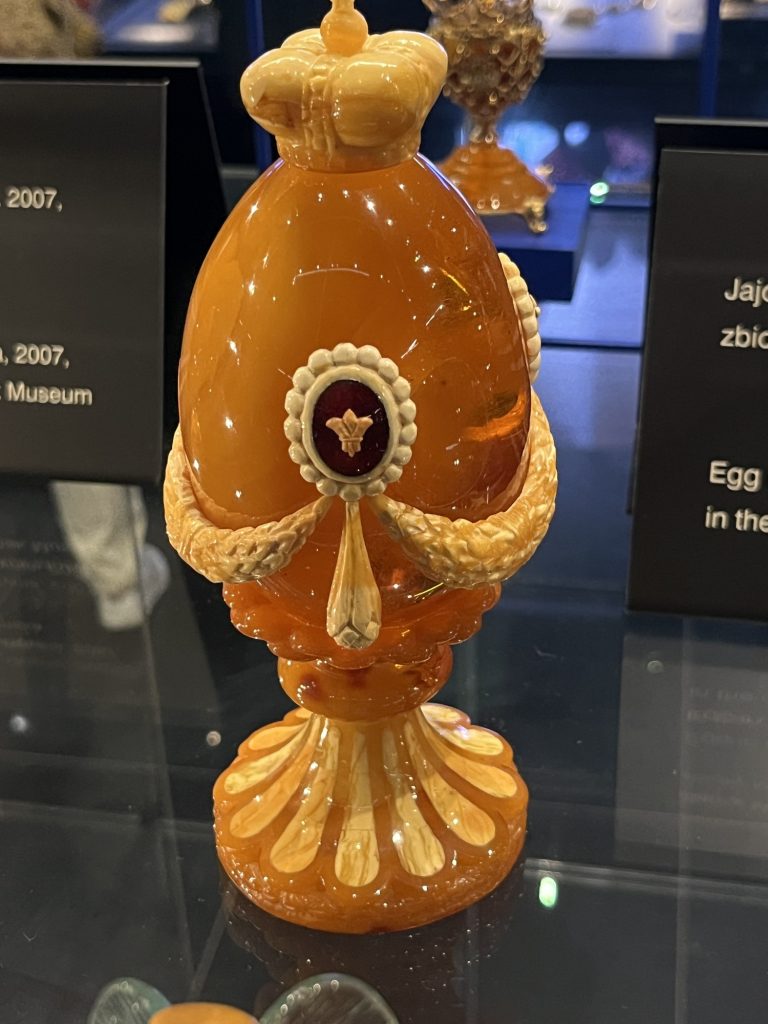
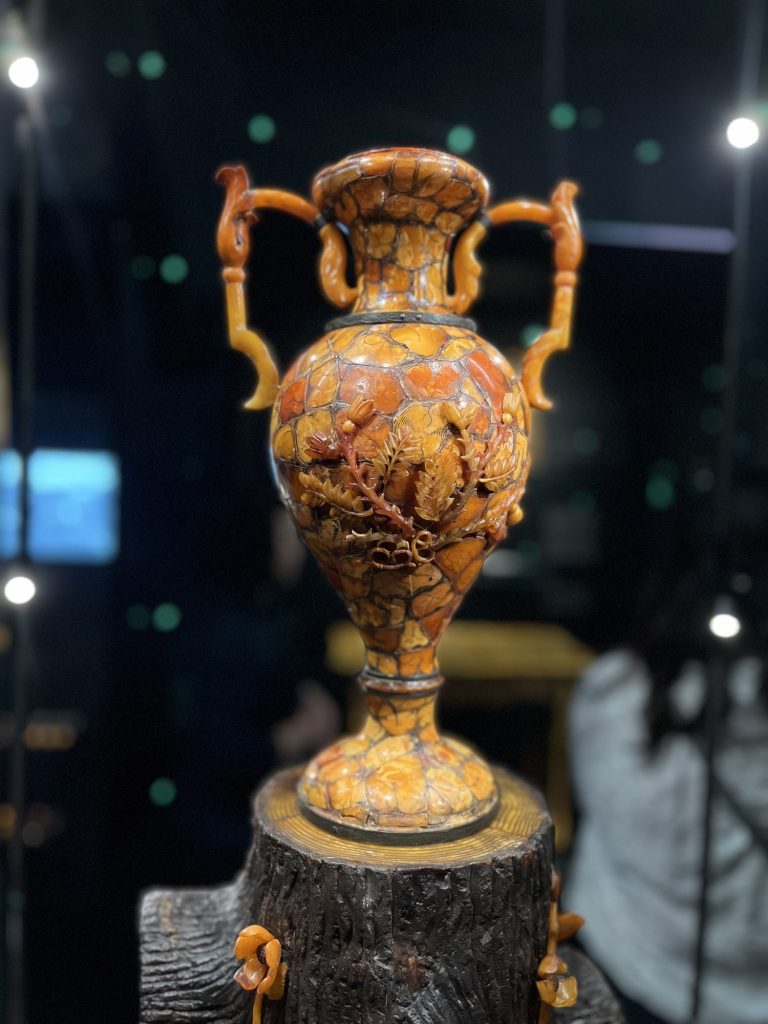
Amber Museum which was a warehouse at the time. The museum presents specimens of natural amber as well as elaborate pieces, highlighting the naming of Gdansk as the world capital of amber. Amber is a fossilized and hardened resin. Baltic amber was formed 40 million years ago. Sap, calcium, rare white amber. Pieces of amber in seaweed. Mixed with other ingredients, amber had medicinal properties, particularly to prevent the spread of the plague, nicknamed the Black Death. Amber chamber made for King Frederick I of Prussia by craftsmen from Gdansk who in turn offered it to Tsar Peter the Great of Russia during his official visit in 1716.
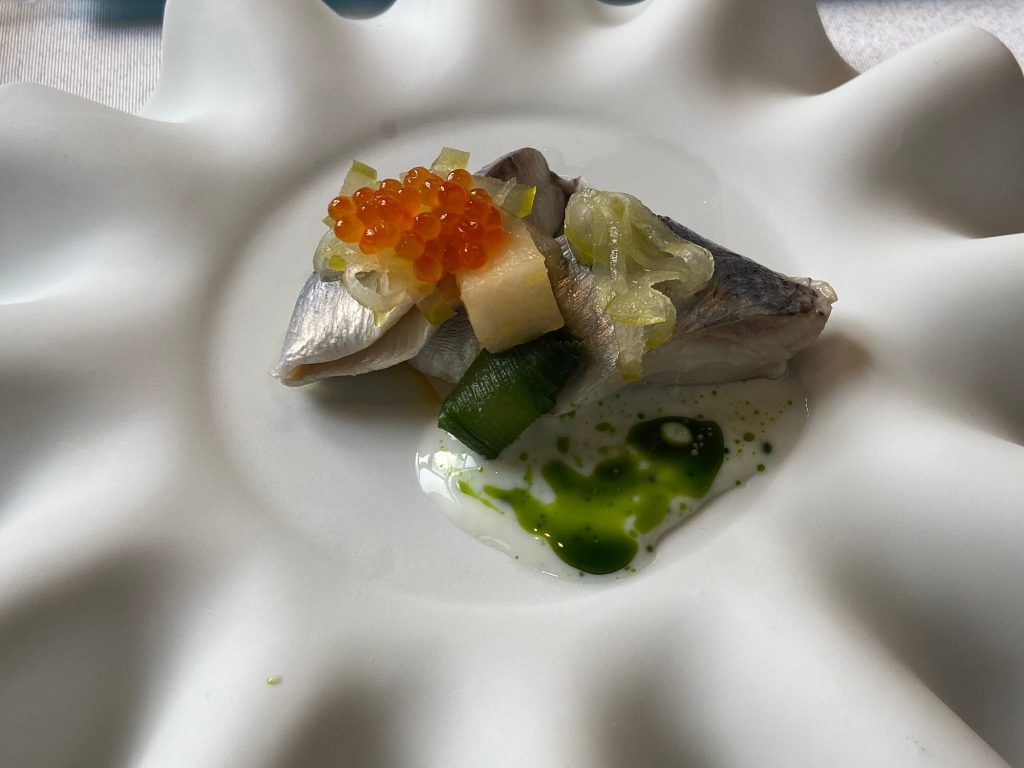
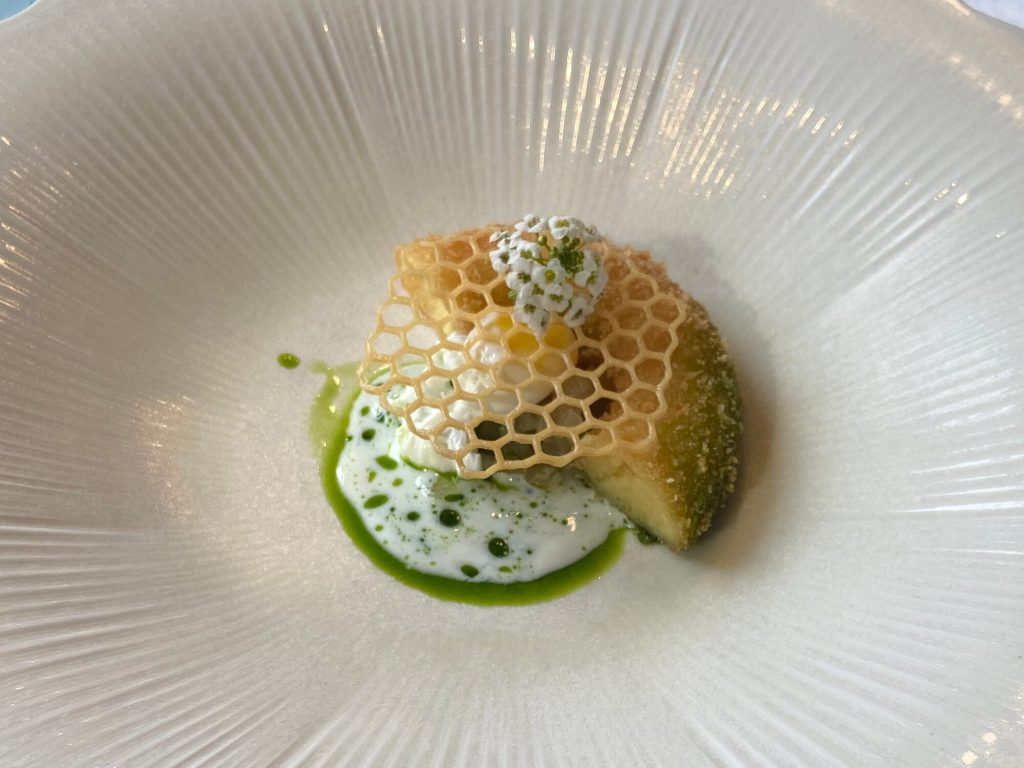
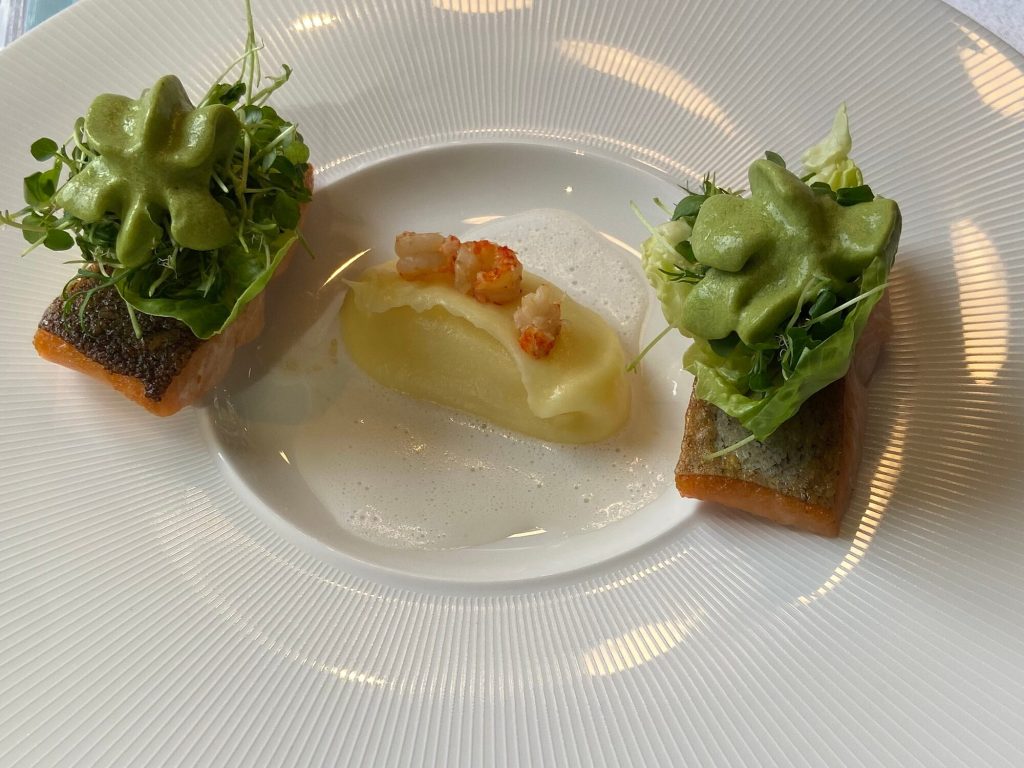
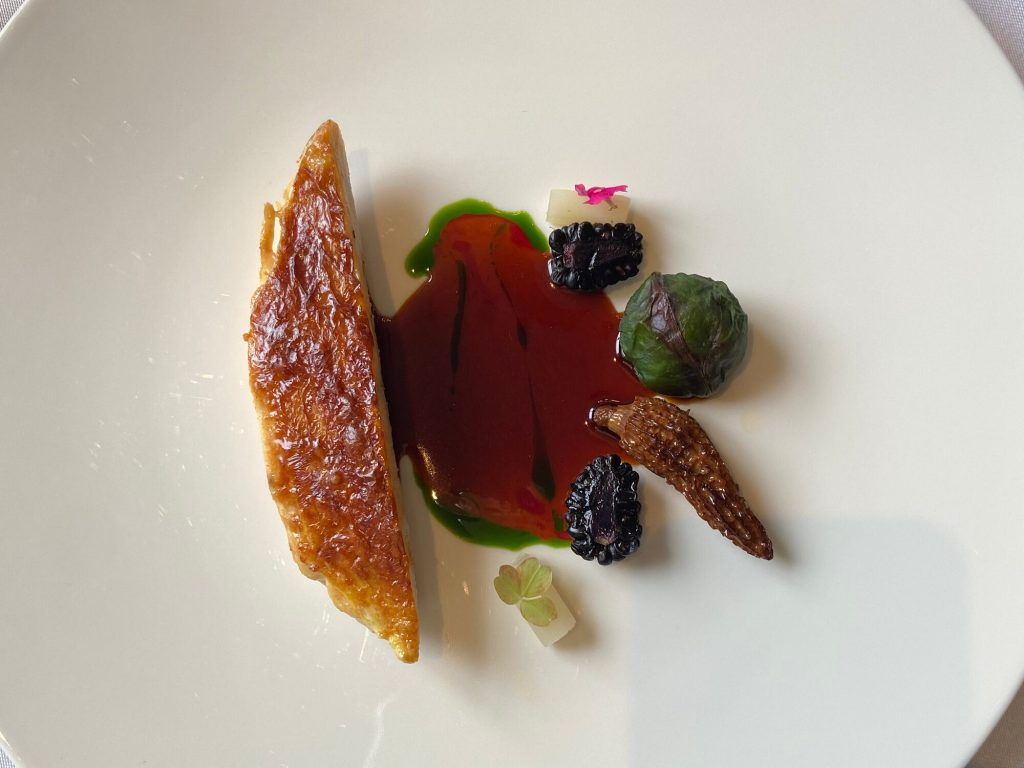
Walk to the Mercato restaurant at the Hilton Hotel recommended by the Michelin guide. Glass of champagne. Frédéric: “Thank you Maciej and Kasia.” Maciej thanks Kasia and all the members of the Polish Academy who helped with the organization, he also thanks the Chef. The Flavours of Gdansk menu is inspired by ancient recipes from the Free City of Gdansk. This project to promote local products combined with the city’s culinary heritage was awarded the 2025 Multimedia Prize by the A.I.G. As an appetizer, reindeer meat fritter, bread and butter. Marinated herring, onion syrup, trout caviar, pineapple cube accompanied by Chopin vodka. This is followed by a nicely decorated sorrel soup, potato croquette and quail egg. For the main course, Zielenica trout, mashed potatoes, champagne sauce, crayfish tails, herbs or chicken breast, Brussels sprouts, morels, demi-glace sauce and blackberries. The dessert consists of a sea buckthorn sorbet on a bed of crumble decorated with amber-coloured crystalised sugar cubes, wild rose caviar, Goldwasser liqueur gel and a mango sorbet.
Free time to rest, walk or go shopping (amber shops).
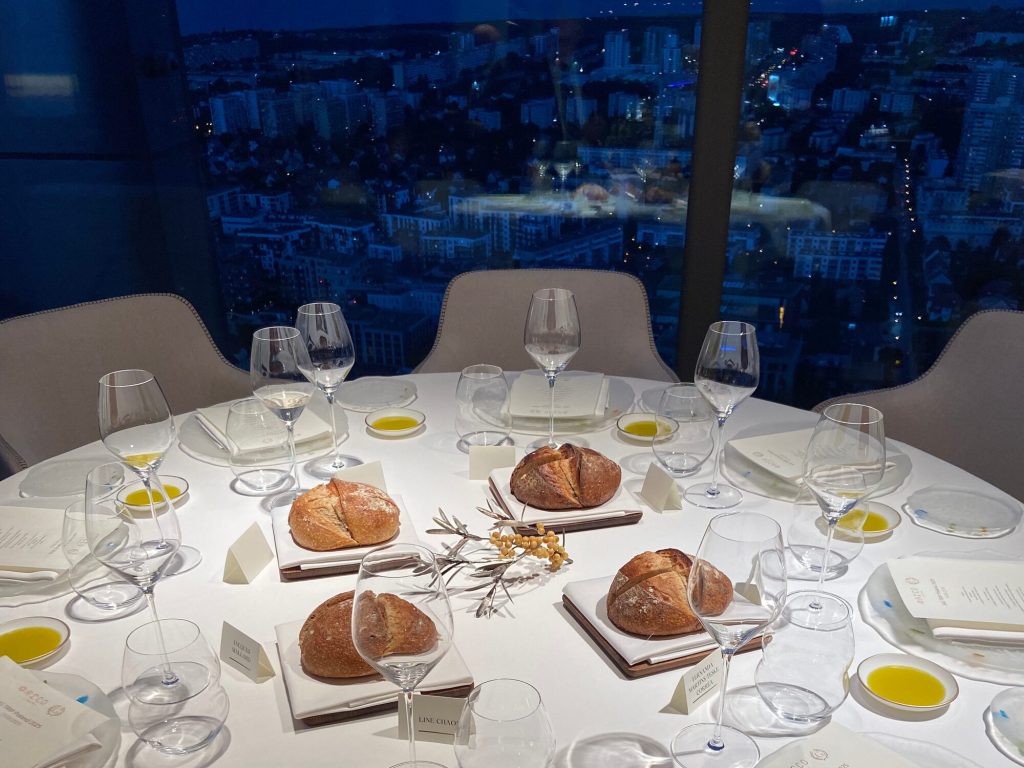
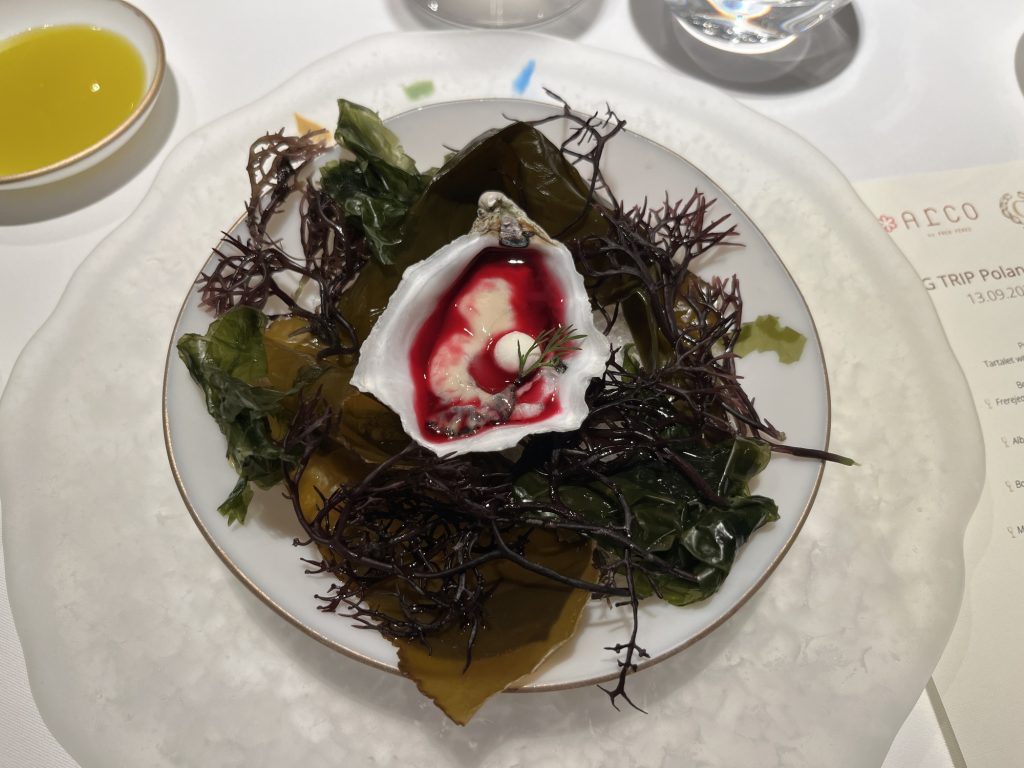
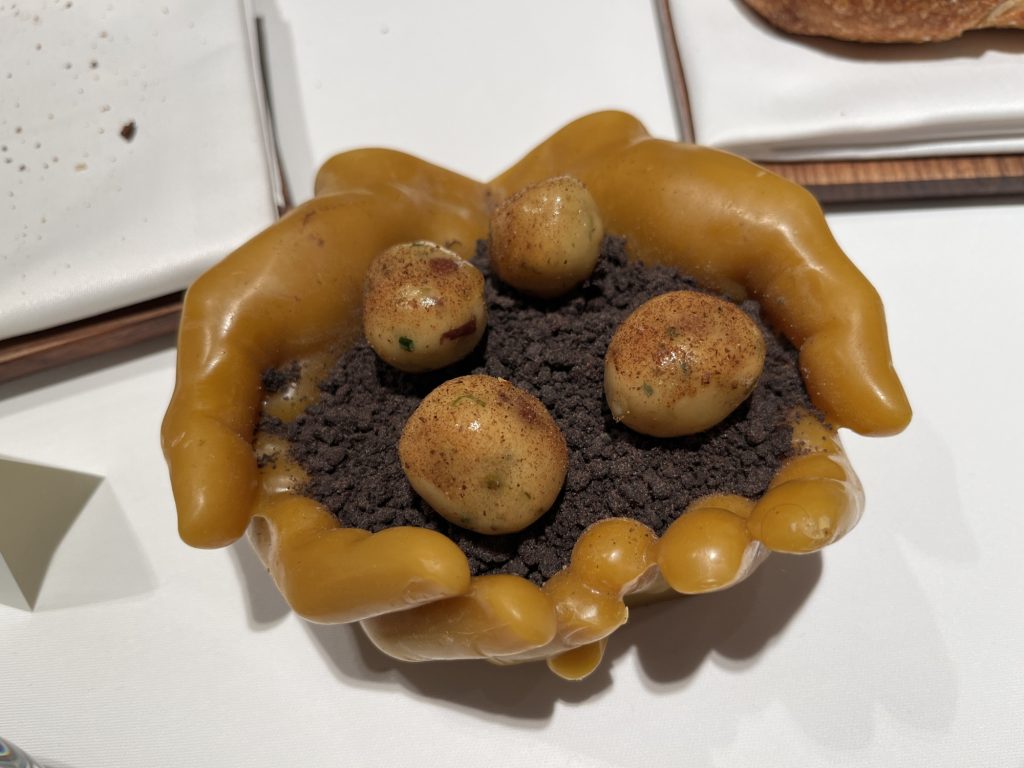
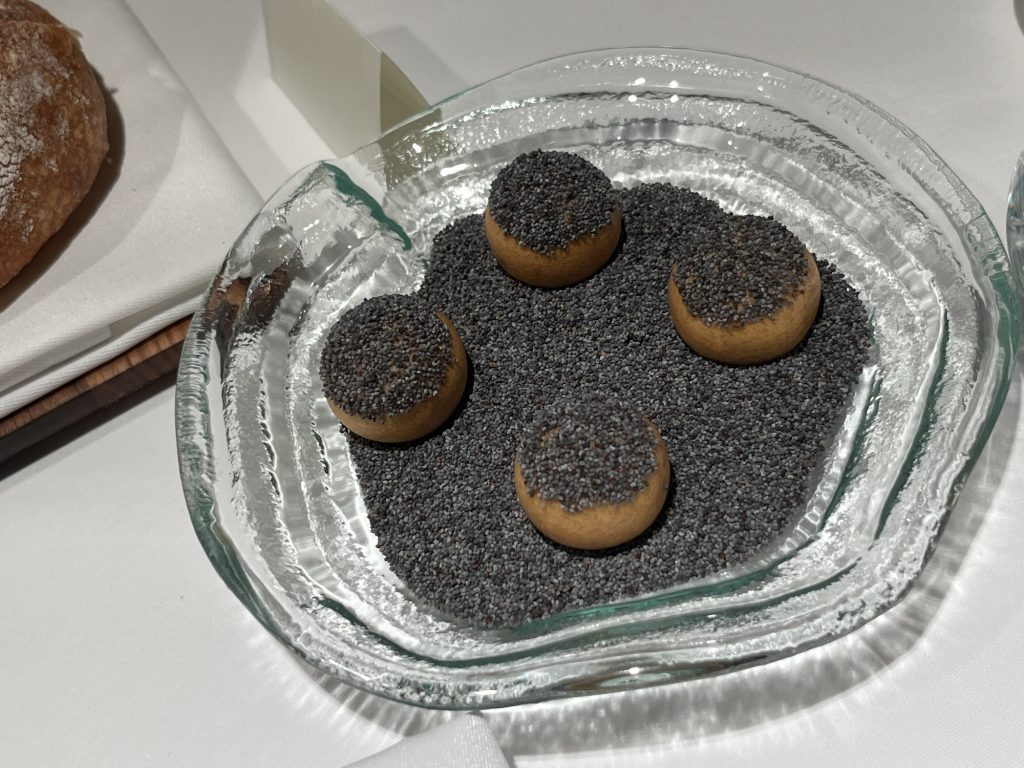
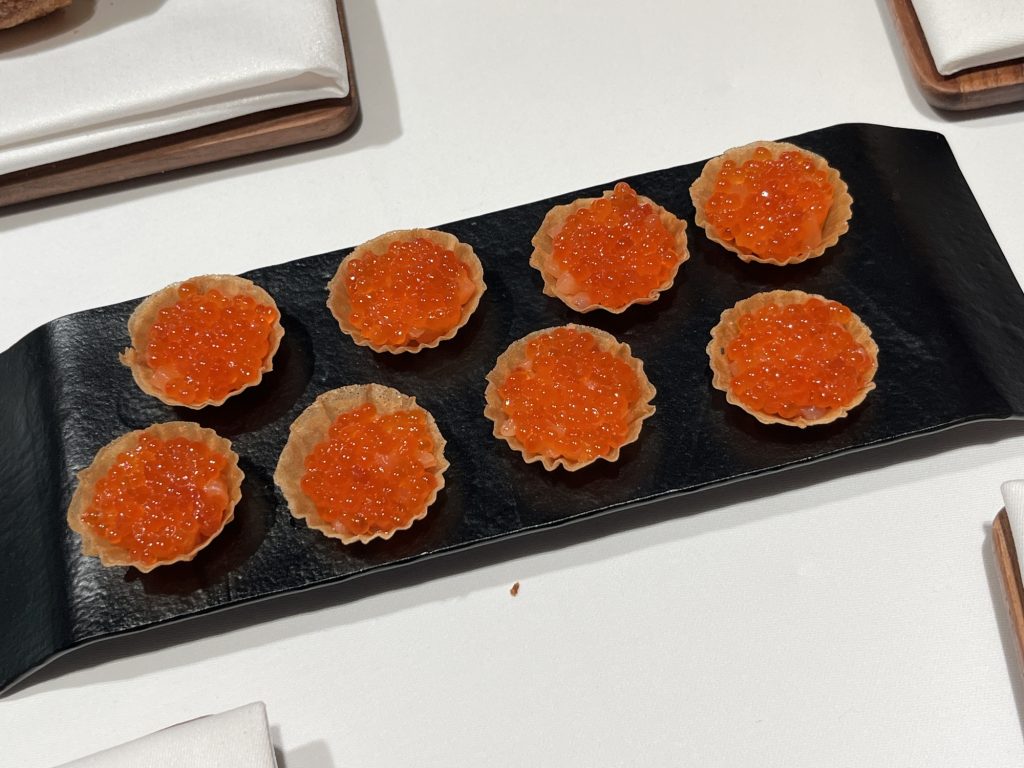
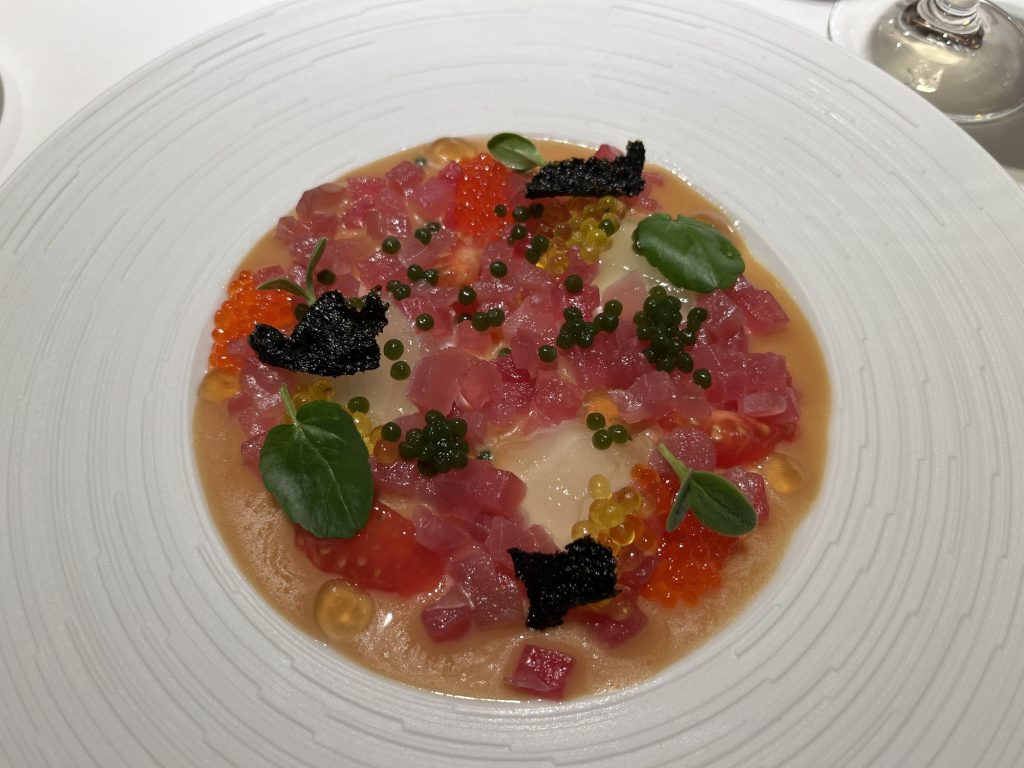
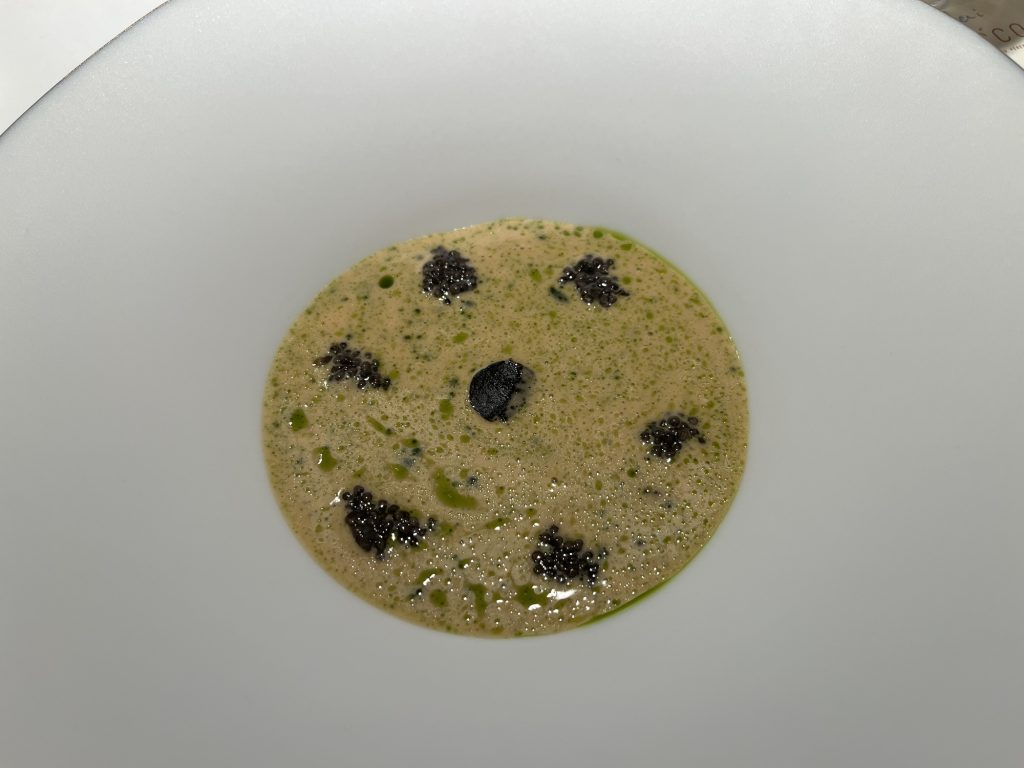
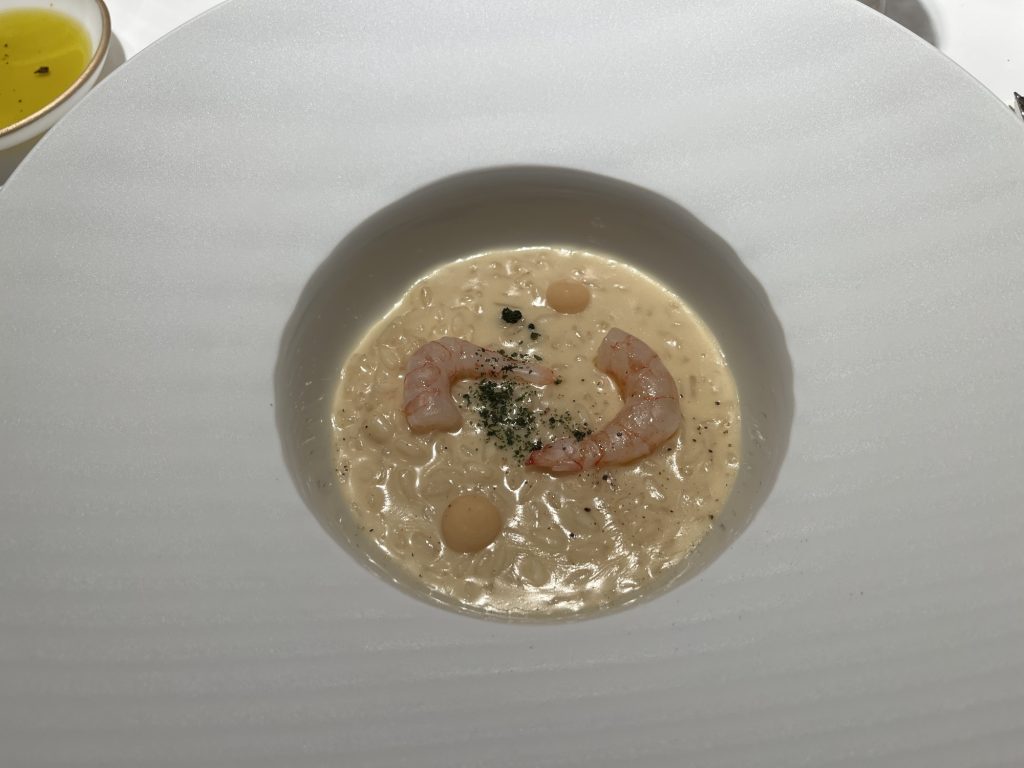
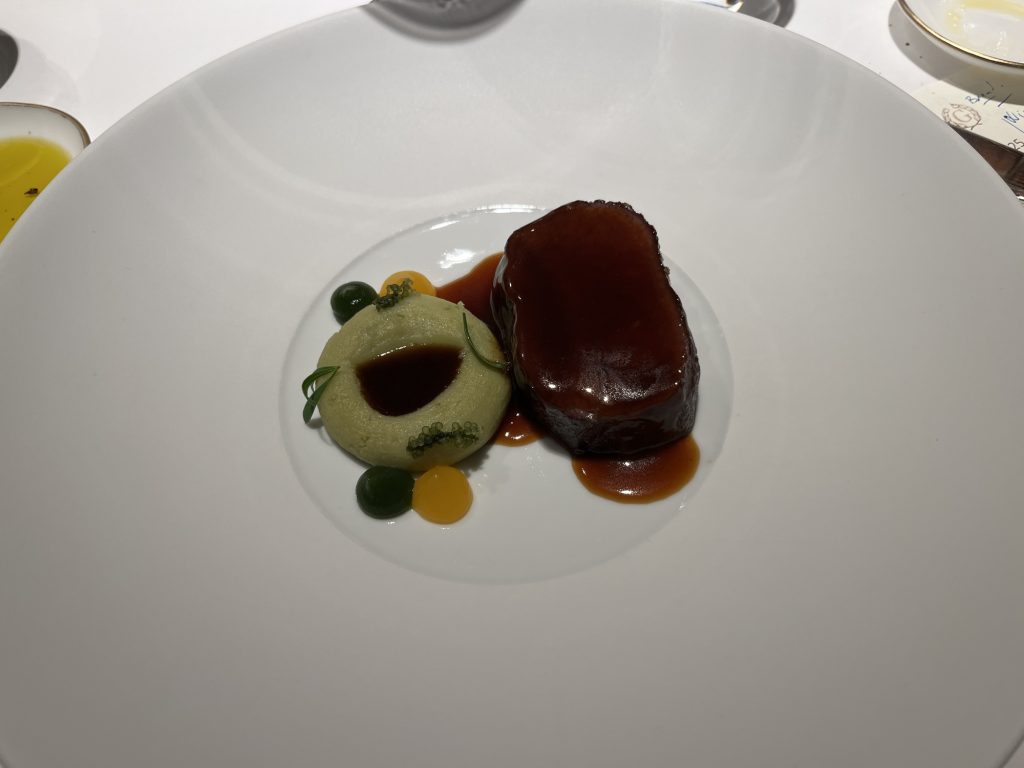
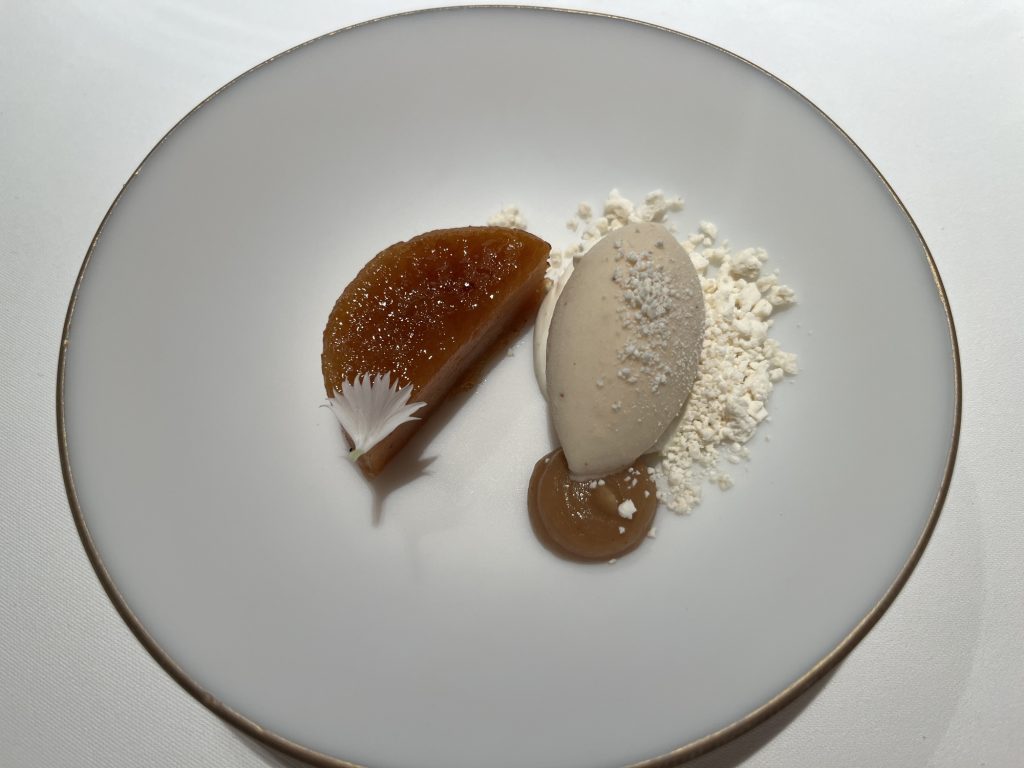
We arrive at 7 p.m. at the Arco restaurant on the 33rd floor of the Olivia Star building with a panoramic view of the city. Arco, together with Chef Paco Perez and Head Chef Antonio Arcieri, offers a refined fusion cuisine combining Spanish and Mediterranean flavours with Polish touches, resulting in extraordinary dishes. In 2024, Arco was awarded its first Michelin star in Gdansk (and the only one in northern Poland) in recognition of its exceptional cuisine and service. Cocktail tables draped in black, cheese pierogi, and caviar tartlets. Iberian ham croquettes. On the set tables, decorative detail: a silver sea buckthorn stem and its fruits in amber. Maciej: “We have reached the highest point in altitude.” The set designer is Dany Garcia and the style is Arco (bow). Presentation plates, very beautiful and glass clear bread plates. The starters are placed on the table, potato salad shaped in balls in the hollow of a container with hands clasped as an offering, trout caviar tartlets, Cebularz (onion bread). Oyster on beetroot juice placed on seaweed (Borscht & Oyster). Bluefin tuna, yuzu and tomato salad full of colour and freshness. Chawanmushi parsley roots. Italian groserano cheese risotto topped with two shrimps in head-to-toe. Venison and its sauce, green purée, a little overcooked. Revisited Tatin pie without dough and vanilla ice cream (szarlotka). The wines are remarkable. It’s Daniel’s birthday, mini cake with a candle, vodka with two glasses. La belle Agnès (Belle Hélène pear but replaced by raspberry). Mignardises with a beautiful presentation. Maciej and the Chef face us. Fabien comments: “It was an international dinner, with the flavours of three different countries, an exchange of ideas and tastes. Sixteen persons were working for us, amuse-bouches had the influence of Poland journey with their colours, flavours and textures. Creamy risotto, venison should have been cooked less. Dessert consisted of apple layers and cinnamon, belle Hélène new version. But wine bottles were not presented during the dinner.” Maciej thanks all the team.
Transfer by bus to the historical Oliwa Cathedral where we have the privilege of attending a private organ concert. The Cathedral is famous for its magnificent rococo organ, one of the largest and most beautiful in Europe. The magic of the Ave Maria melody operates and fills us with contemplation.
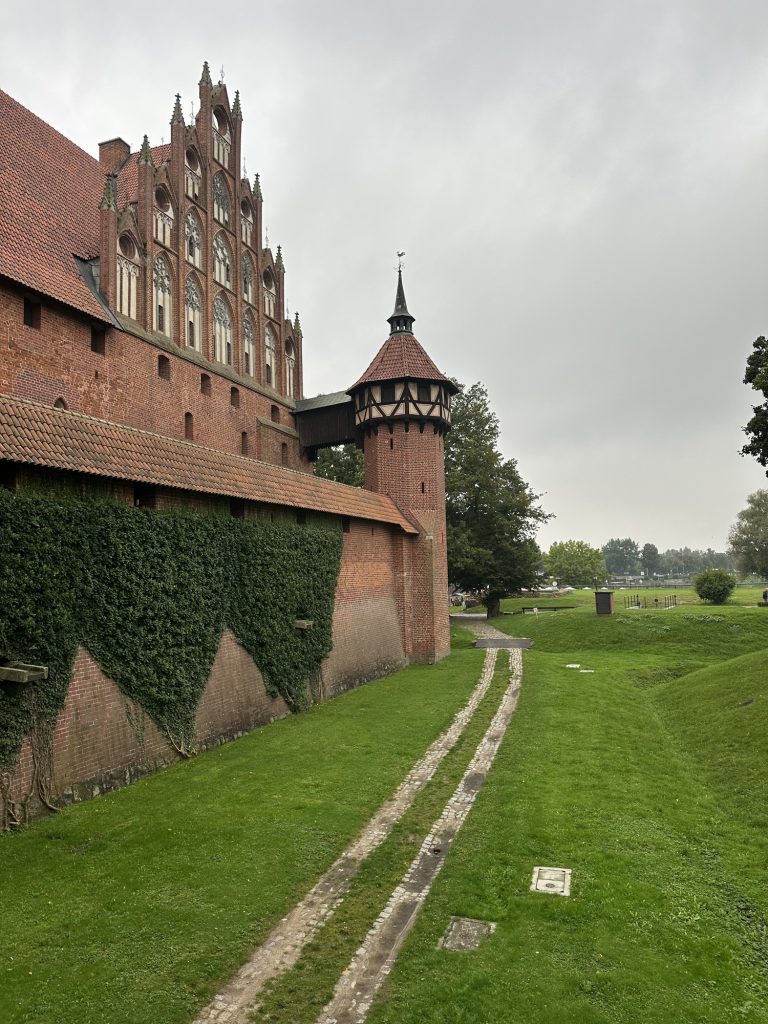
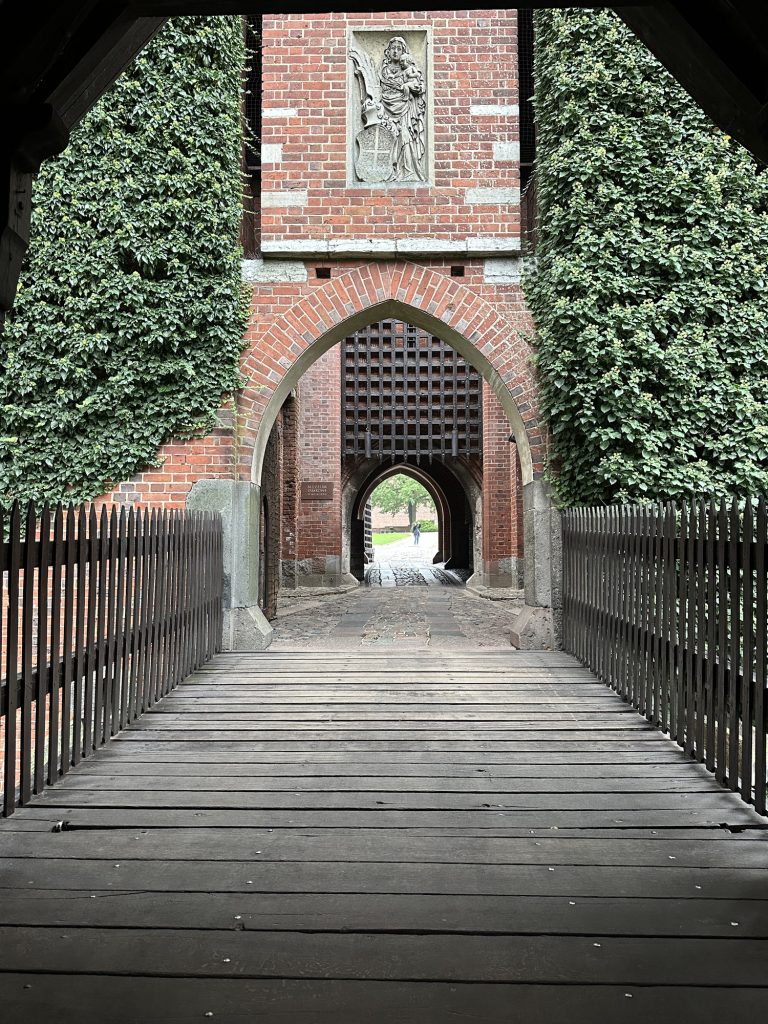
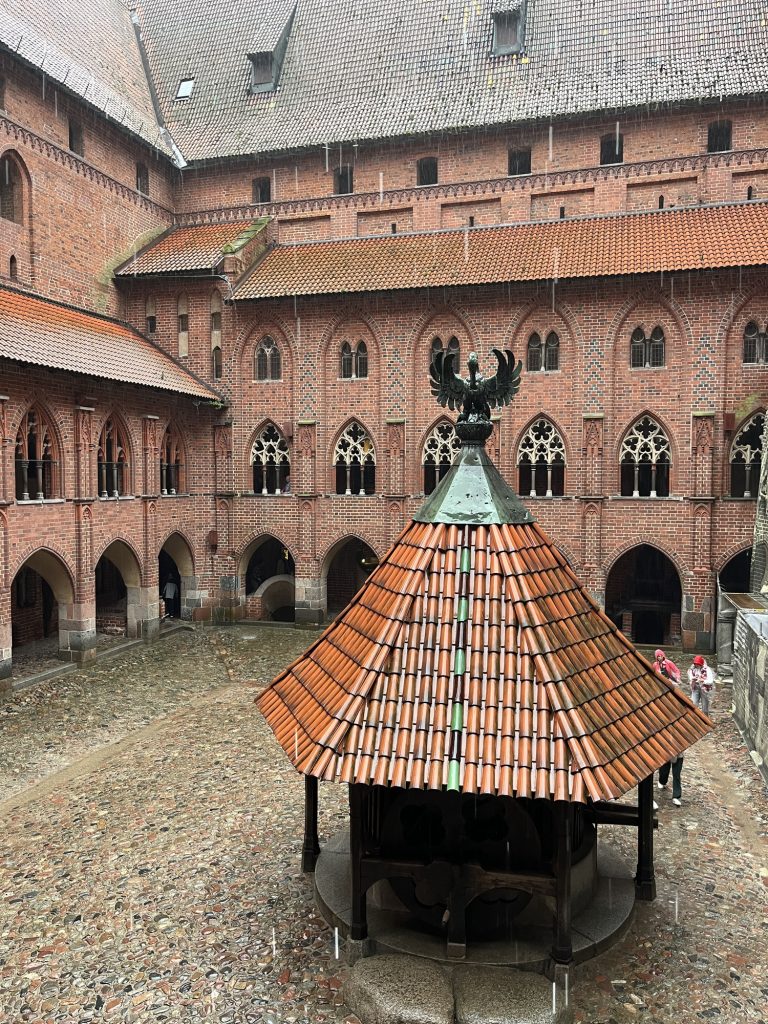
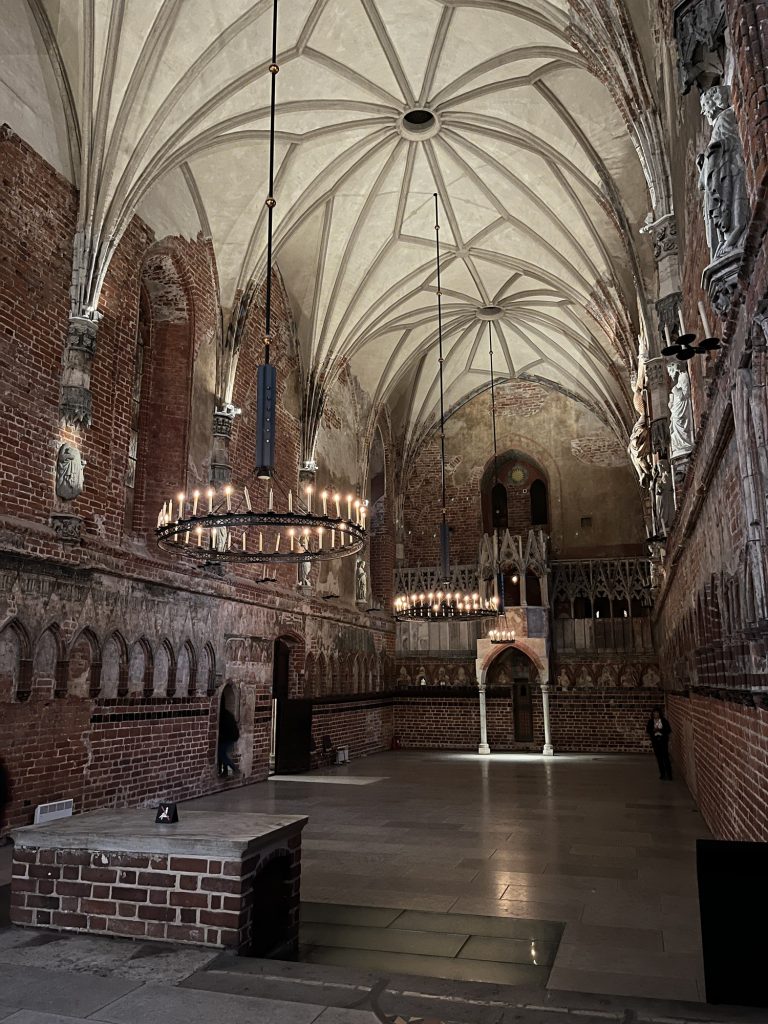
Sunday 14th: the passage to the breakfast room has a glass-floor under which are arranged on a white background old terracotta jars and kitchen utensils, objects of excavation. On board the bus at 10:10 am. Maciej gives information about the current day. The journey to Malbork Castle takes 50 minutes. We are welcome by the mayor and receive lapel pins in the shape of coats of arms with the castle in red. Our guide is dressed in a long red dress with a white nun’s headdress. Built by the Teutonic Knights in 1280, it housed their headquarters and was a powerful symbol of medieval military architecture in gothic in style. It is composed of 30 million bricks and has 14 gates and 4 drawbridges. Largely destroyed during the Second World War. The lighter bricks are those that have replaced the destroyed ones. Tower to transmit messages, chapel, stables, granaries. Listed as a UNESCO World Heritage Site in 1997, it is the largest brick castle in the world. Courtyard, bath every 15 days… Henri IV passed through it. The Teutonic Knights were the enemies of Poland. Monastery. Heating room in the basement, ancestor of underfloor heating… The oven consists of two parts: stones heated in the oven, and a chimney. Large room that can accommodate 400 people for meals (refectory). Feudal system. A fourteenth-century chapel, the floor dates from the Middle Ages. Grand Master’s Room, frescoes of 1404. The vine symbolises wine. They used to wash their hands before meals. Seasonal dining room. Desk in the decorative style of the nineteenth century. Church. Detail of the toilet: above the toilet with lid, a wooden structure containing cabbage leaves (used as toilet paper). Depth of the moats. Monks’ dormitories, cult of saints. Grand Master’s chair, choir. We are soaked by the torrential rain.
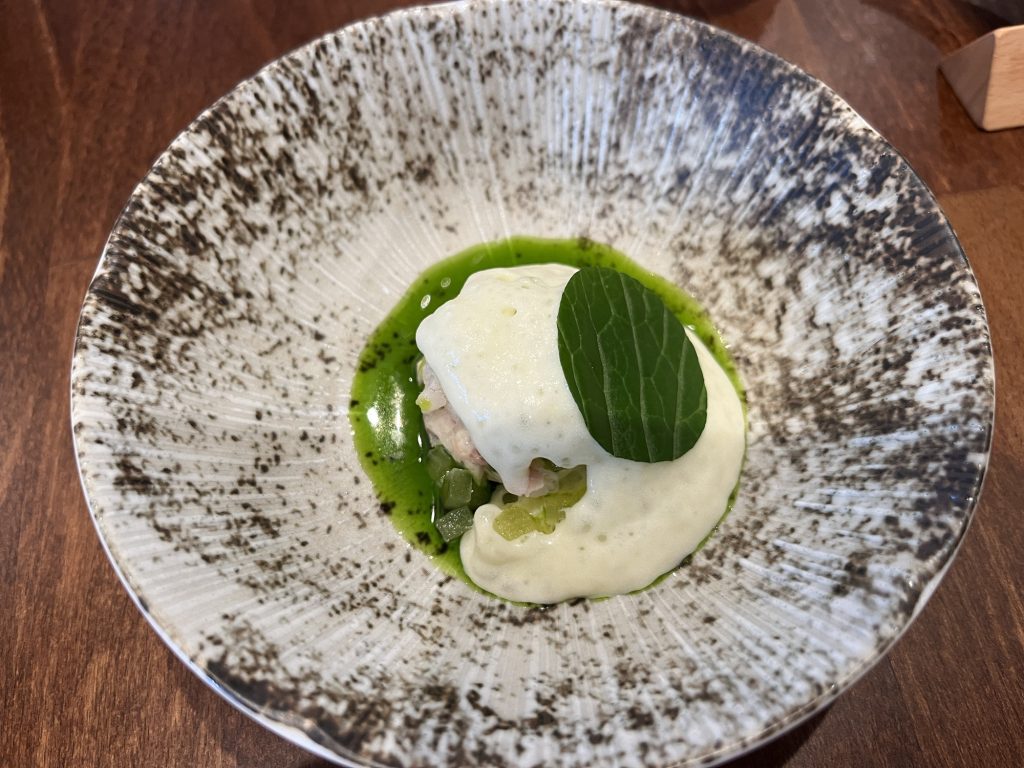
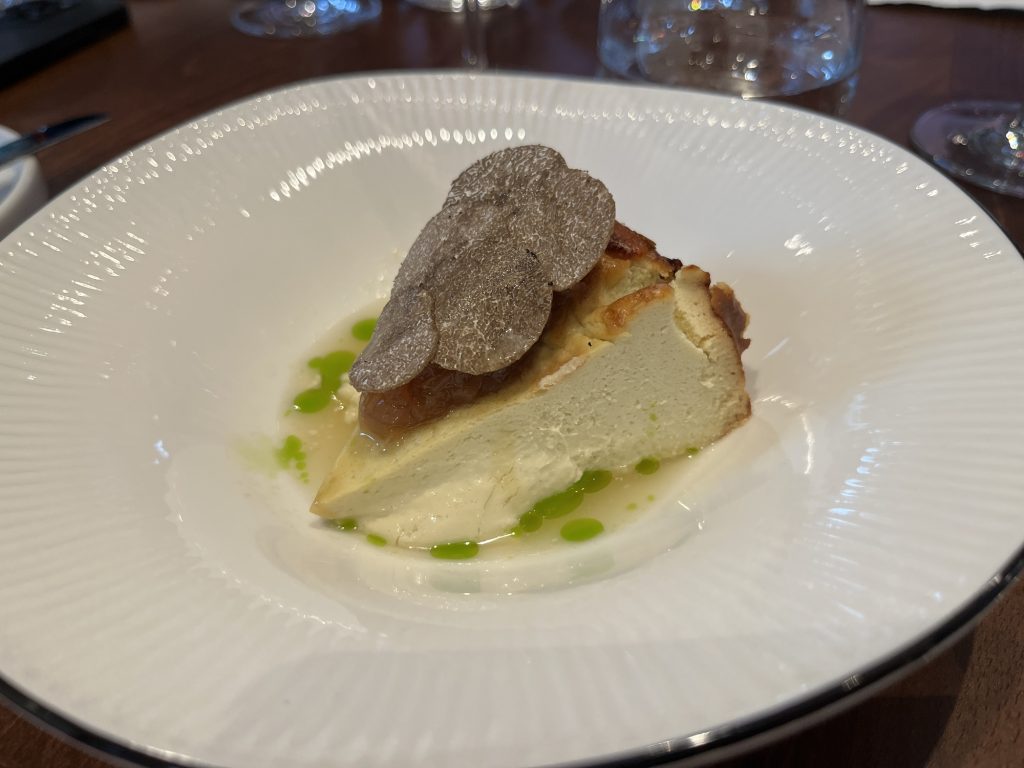
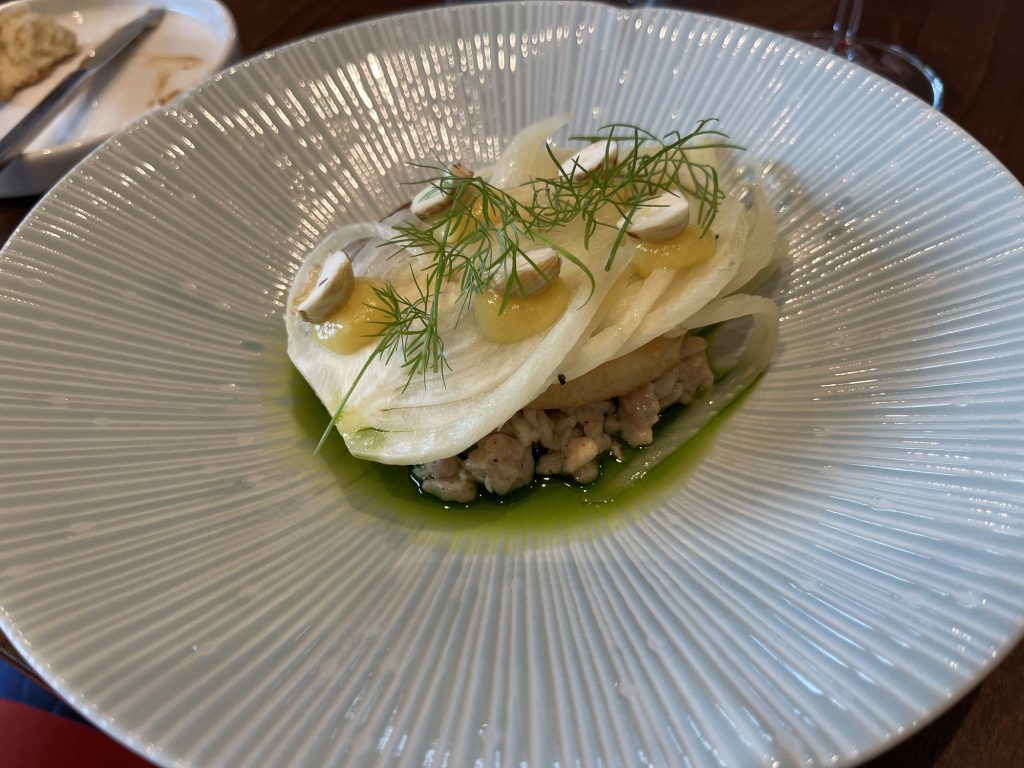
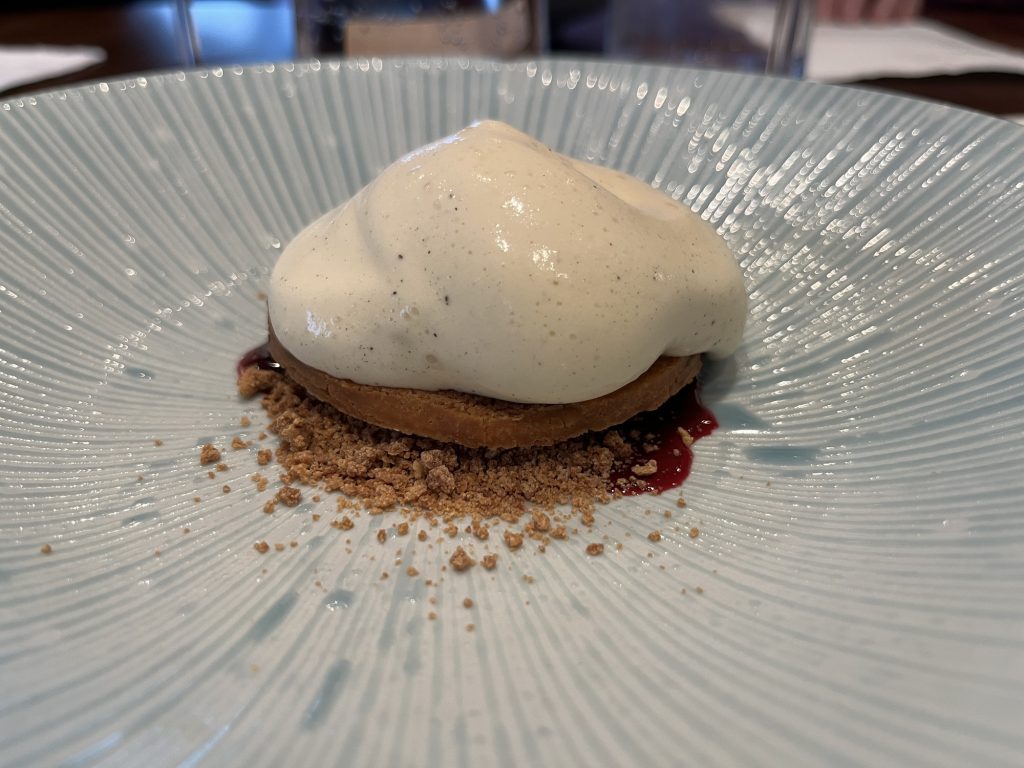
On the bus to Sztuczka restaurant, located opposite the Second World War Museum in the heart of Gdańsk, by the river. Maciej: “It is our last meal today, thank you for coming.” Lucas: ”Thank you from myself and the mayor, Gdansk is a city of freedom and solidarity.” Chef Rafał Wałęsa is the recipient of several prestigious awards, including the Michelin Special Award for “Inauguration of the Year 2025”. Sztuczka has consistently maintained its position among the best restaurants in Poland. Amuse-bouche made with smoked eel, potato and wasabi. Blue Jersey cheese cake with shallots, honey, truffles, pear and tarragon accompanied by a golden and appetising thyme brioche. Choice of main course: sweetbreads, porcini mushrooms, potato fritters, sauerkraut and almonds, or vegetarian spätzle (small pasta), fennel, hazelnuts and garlic with brown butter quenelle shaped on the side. Dessert: Drozdzowka 2025, a small blueberry and yeast pastry on crumble. Fabien : “We thank Maciej, his wife and his daughter for the perfect organization of the trip. Attention was given to details, the event set the bar too high.” Jacques: ”It is our third trip to Poland, gastronomy was not a success then. Ten years later, it is simply outstanding! A giant jump forward.” Maciej : “The past 14 years have seen a huge development, Chefs have been sent abroad. The amuse-bouches and the lunch today reflected creativity and innovation… In Poland, the tradition for Christmas is the smoked sturgeon.” Chef is requested to show up. Daniel : ”I congratulate Maciej and the whole Polish Academy. We were received and pampered like at home. The Chef is a member of Wałęsa family, this is important to the western world. We reached the top, regional ingredients were fantastic.”
Members leave the restaurant as they depart according to their flights or trains schedules. Once again, a beautiful trip carefully prepared by our hosts that combined the pleasure of discovery with culinary pleasures in a cocoon of comfort, all with flawless professionalism.
Thank you Poland!!