
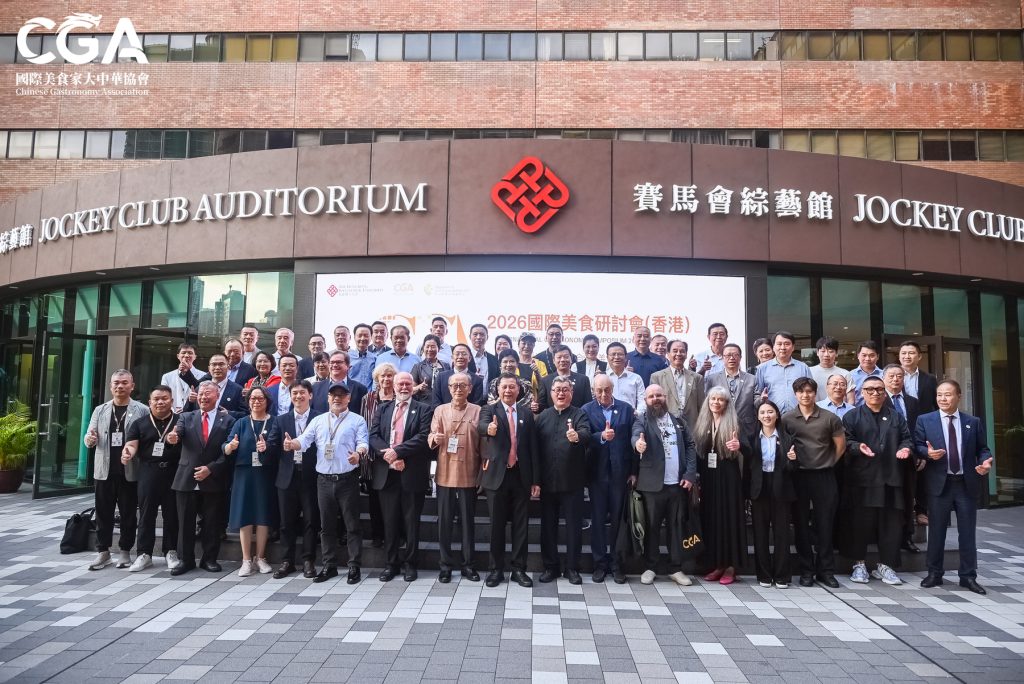
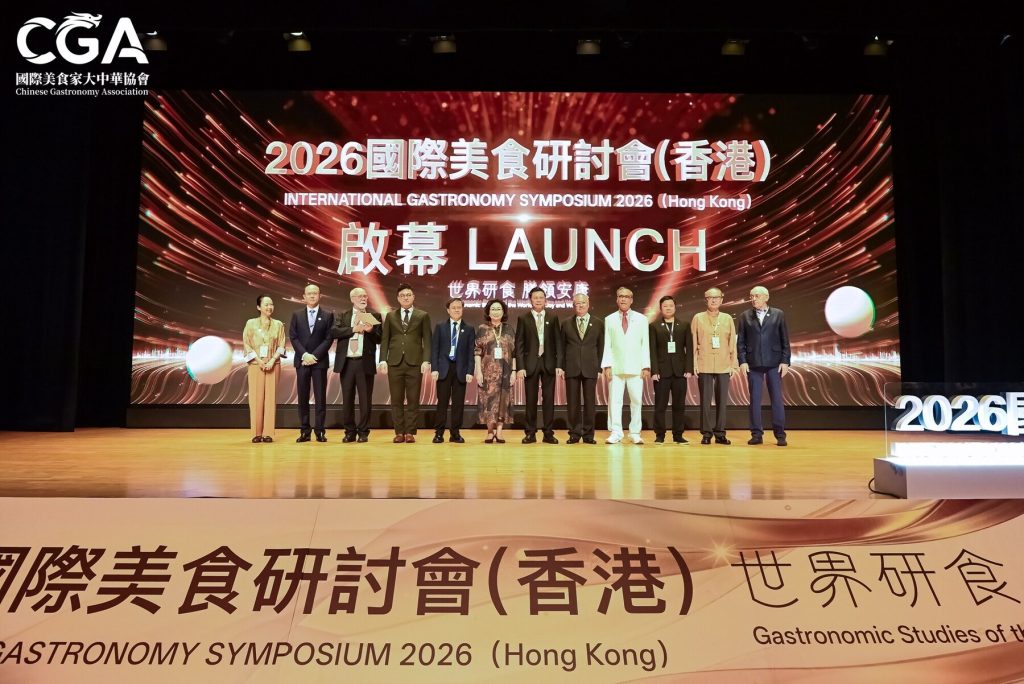
The Chinese Gastronomy Association (CGA) brought the International Gastronomy Symposium to Asia for the first time, convening scholars, gastronomic institutions and industry representatives from Asia, Europe and Latin America at The Hong Kong Polytechnic University (PolyU). Organised by CGA, a member academy of the International Academy of Gastronomy (A.I.G.), and academically hosted by PolyU and its Department of Food Science and Nutrition, Supported by the World Federation of Chinese Catering Industry.the symposium created a platform for Chinese and international perspectives to meet on questions shaping the future of gastronomy.
Under the theme “Gastronomic Studies of the World with Joy and Wellness”, CGA placed three closely connected areas at the centre of the programme: gastronomy, health and longevity; gastronomic science and innovation; and gastronomy-led place branding. Through these themes, the association linked its work to advance Chinese gastronomic knowledge with a wider international conversation about health, cultural identity, sustainable food systems, local development and dialogue between societies.
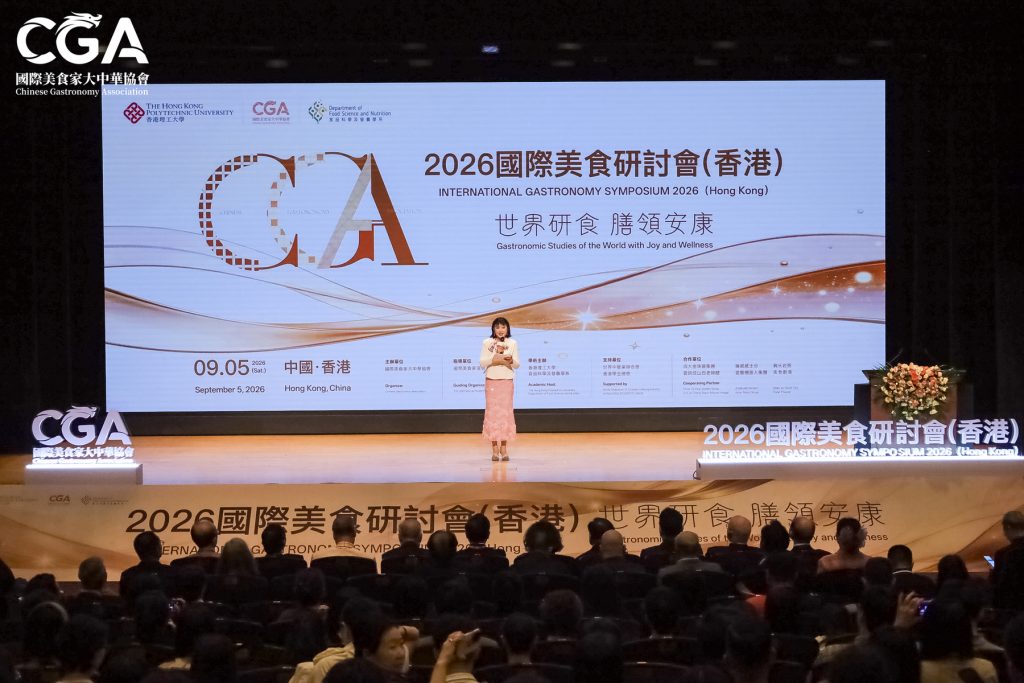
CGA convenes a global platform for gastronomy and human wellbeing
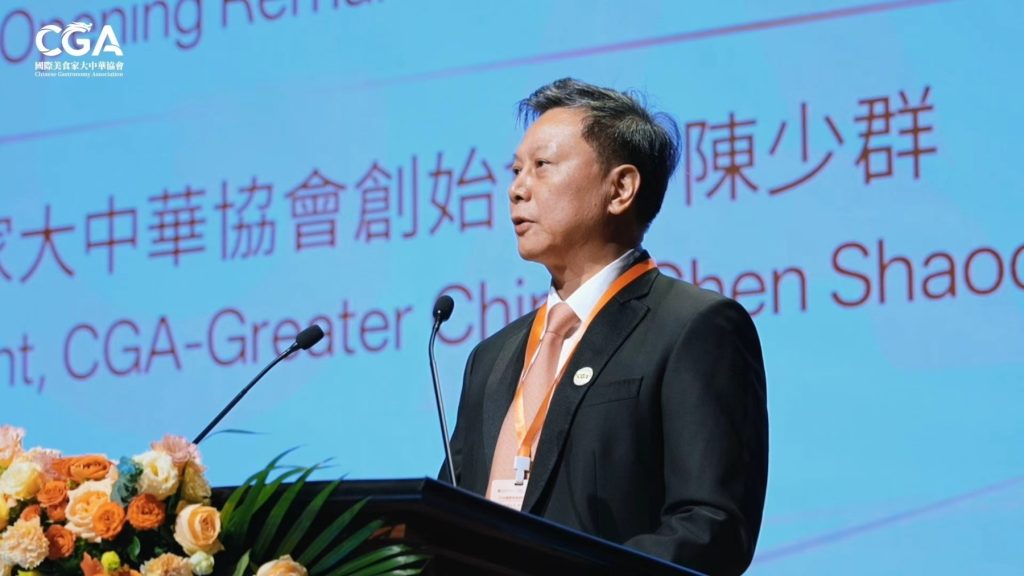
Opening the symposium, CGA Founding President Chen Shaoqun recalled the association’s mission to help Chinese gastronomy develop from accumulated experience into a more systematic field of knowledge. He emphasised that gastronomy begins with respect for life, framing health and human wellbeing as the foundation of the symposium’s scientific and cultural discussions.
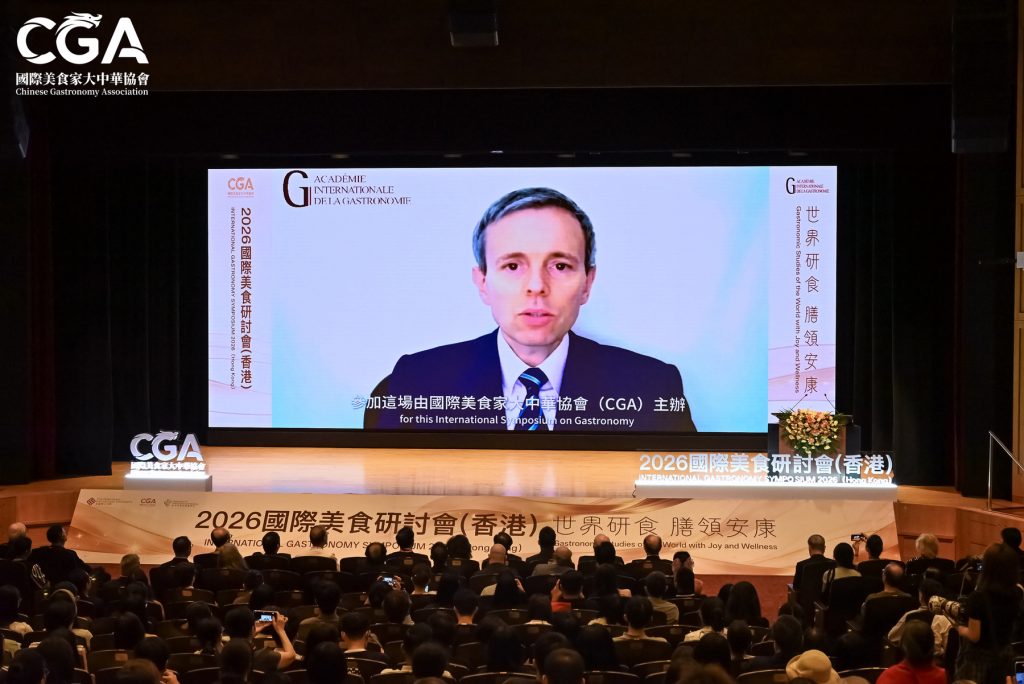
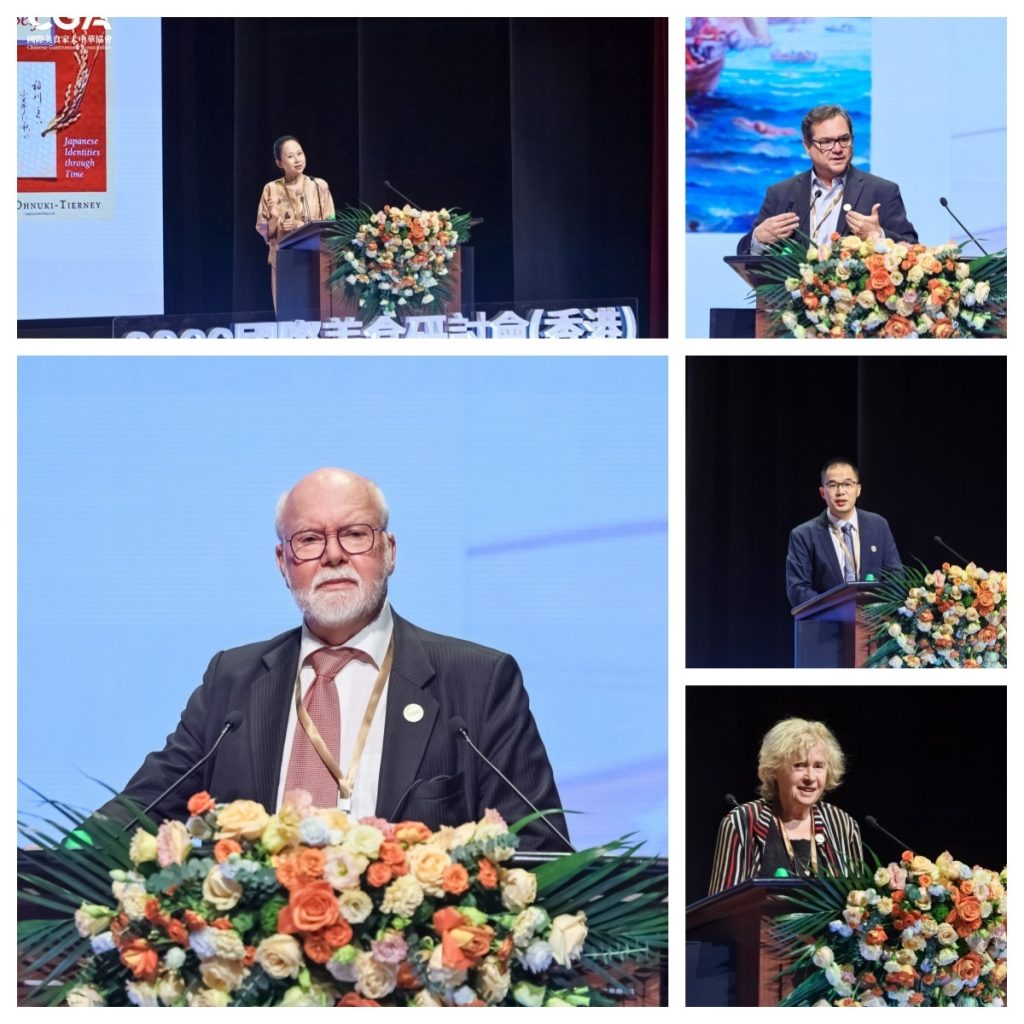
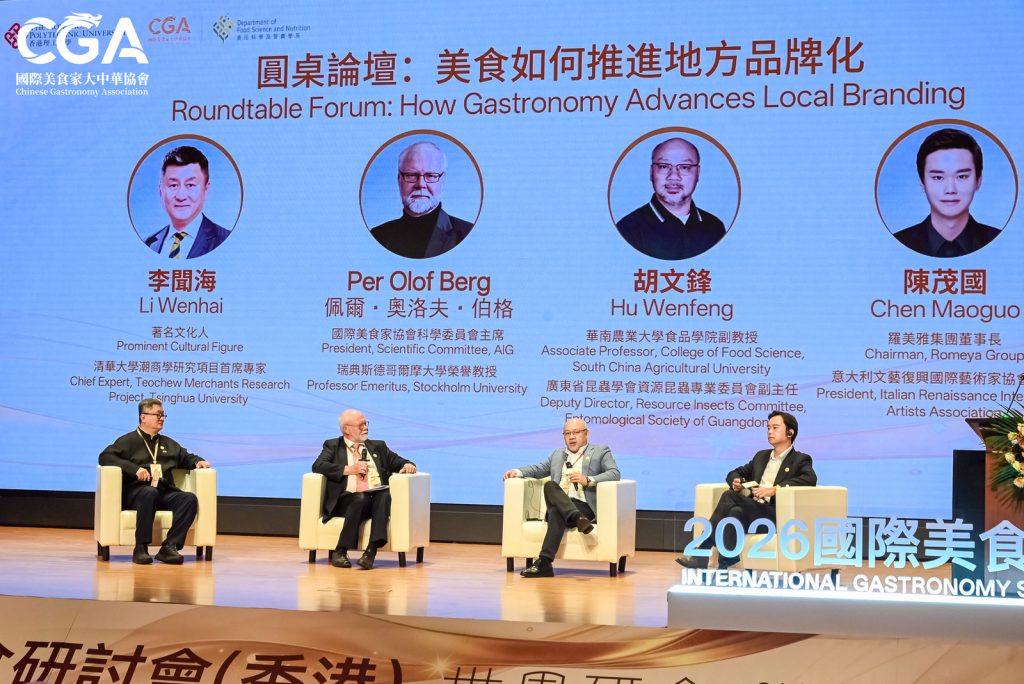
Representatives of A.I.G., CGA, PolyU, public institutions and the international gastronomic community opened the symposium. In a video address, A.I.G. President Fabien Peticolas described gastronomy as a language shared across borders and linked the work of the symposium to the common pursuit of health and longevity. Per Olof Berg, Chair of the A.I.G. Scientific Committee, joined the programme in Hong Kong and contributed to the discussion on gastronomy and place branding.
By bringing A.I.G., PolyU, public institutions, researchers and industry practitioners into the same programme, CGA connected scientific research with culinary heritage and practical innovation. Hong Kong’s position as a meeting point between Chinese and international food cultures provided a distinctive setting for the association to deepen exchange between the Greater China region and the wider gastronomic community.
Gastronomy health and longevity
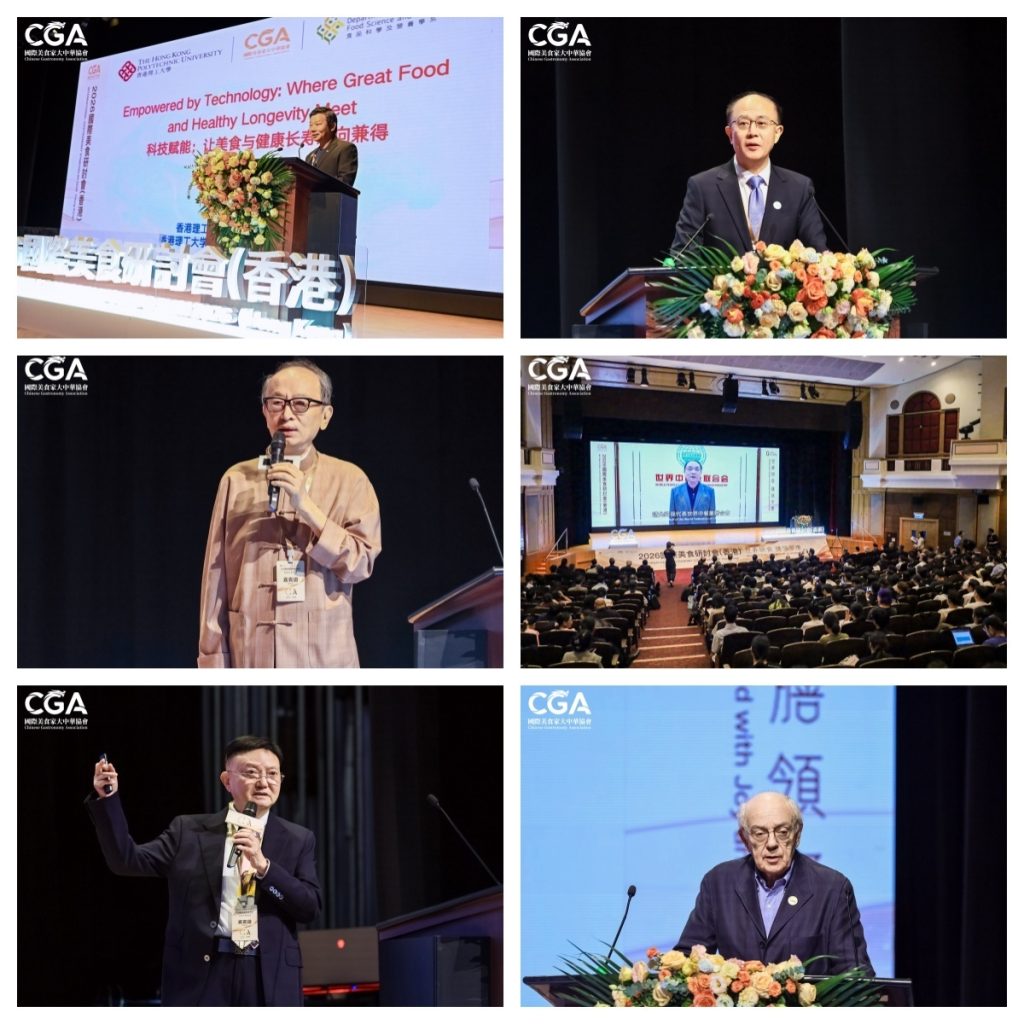
The first thematic programme examined how food cultures and emerging technologies can support healthier and longer lives. Professor Sheng Chen, Head of PolyU’s Department of Food Science and Nutrition, compared established longevity diets and highlighted developments including 3D food printing, green extraction, AI-enabled precision nutrition and improved foods for older adults. His presentation underlined a practical challenge shared across societies: healthy food must also be appealing, convenient and acceptable in everyday life.
Claude Fischler, Research Director at the French National Centre for Scientific Research (CNRS), approached gastronomy as rational knowledge about how human beings nourish themselves. Drawing on both Chinese and European intellectual traditions, he examined the role of food in forming identity and described cuisines as distinct cultural “grammars” through which human unity and diversity can be understood.
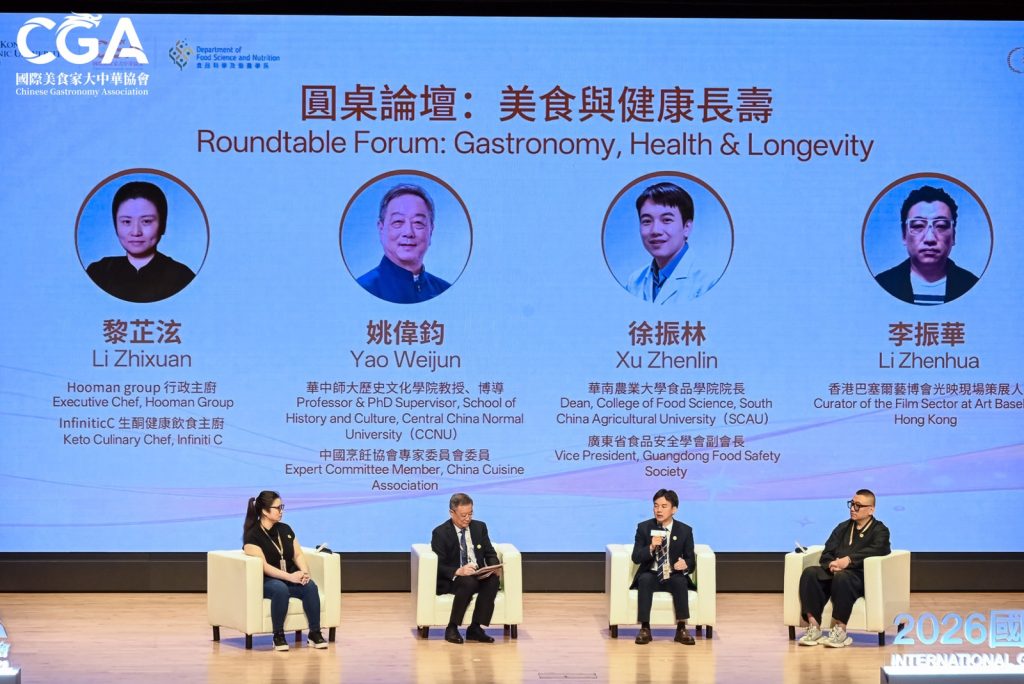
Speakers from Hong Kong and mainland China added perspectives from preventive nutrition, Cantonese dietary traditions and the Chinese concept of food and medicine sharing common origins. The discussion placed these traditions alongside contemporary nutritional science, while a round-table session stressed scientific evidence, balance and moderation rather than universal dietary prescriptions.
Scientific innovation must reach the table
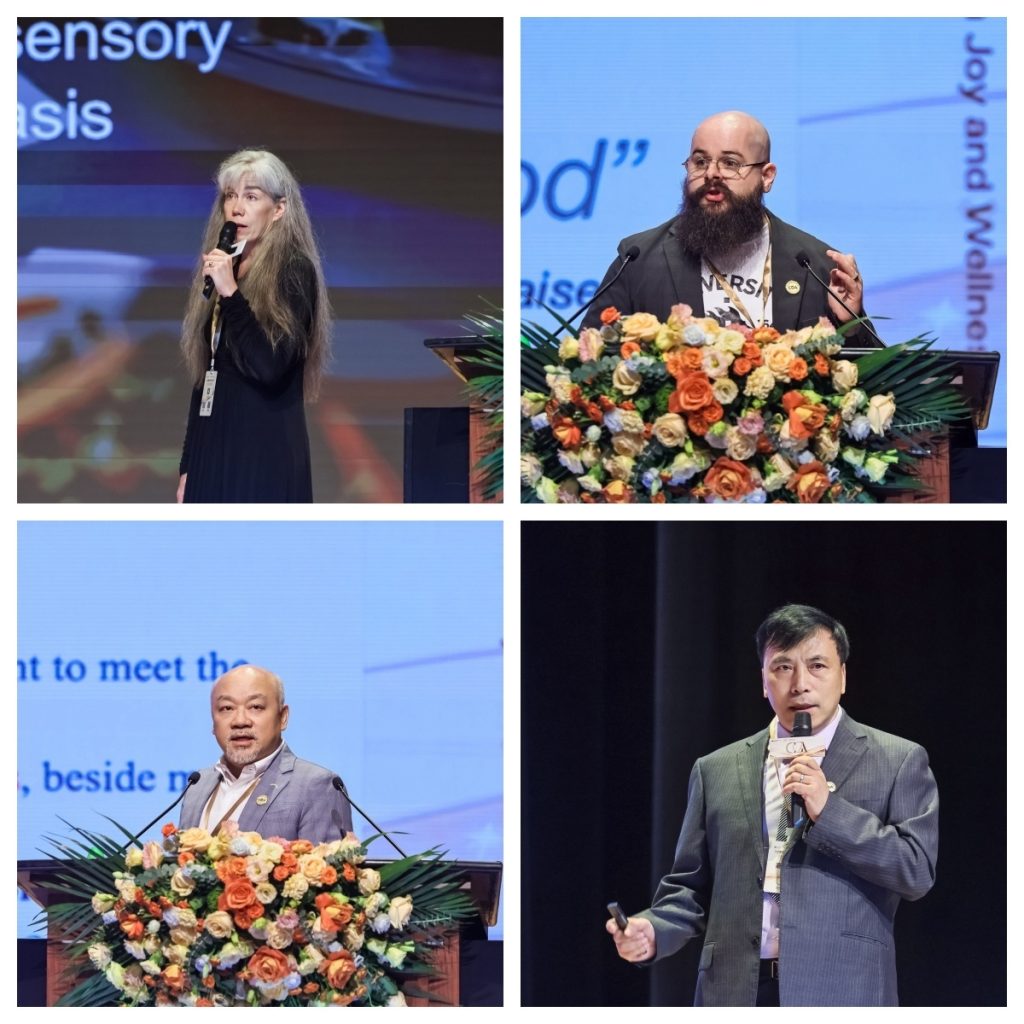
The second programme focused on the conditions that allow food innovation to move from research into daily life. Mari Sandell, Professor of Food Sensory Science at the University of Helsinki, stressed that nutritional value and safety alone do not guarantee acceptance. Sensory experience, affordability, accessibility and cultural meaning all influence whether new foods can contribute to a more sustainable food system.
Mikael Malmivaara, Chairman of Northlink Partners, presented gastronomic innovation as a response to real needs involving chefs, food manufacturers, researchers and communicators. Discussions on alternative proteins, including insect-based foods, illustrated the wider challenge: scientific potential must be matched by good flavour, appropriate formats, public trust and workable regulation.
Chinese researchers and industry practitioners also presented work on resource-efficient proteins, AI-assisted cooking and the conversion of culinary experience into measurable parameters. Across the sessions, one conclusion emerged clearly: meaningful food technology is technology that people can understand, accept and use.
Gastronomy as a force in place branding
The third programme considered how gastronomy can help shape the identity and development of places. Per Olof Berg introduced the idea of cultivated place branding, explaining how markets, neighbourhoods, festivals, gastronomic guides and international certification do more than represent a place — they participate in its continuing formation.
Contributions from China, Brazil, Finland and the United States explored how food carries memory, communicates local values and creates multisensory connections between people and destinations. Gustavo Braga, Vice President of the Brazilian Academy of Gastronomy, discussed how regional diversity can contribute to a national gastronomic identity. Guje Sevón drew attention to the way taste, smell, touch, emotion and memory influence how a city or region is experienced.
The accompanying round-table discussion addressed the balance between visibility and authenticity. Participants noted that digital media can rapidly extend the reach of local food cultures, but long-term trust still depends on product quality, cultural credibility and the protection of local knowledge. Examples including protected designation of origin frameworks demonstrated how collaboration and standards can support recognition without erasing regional character.
From Hong Kong to Helsinki
At the close of the symposium, representatives of China and Finland completed the official handover for the next edition. Mari Sandell received the symposium flag on behalf of Finland from CGA Founding President Chen Shaoqun, confirming Helsinki as the host city for the International Gastronomy Symposium 2027. In his closing remarks, CGA President Lü Wenju reaffirmed the association’s role as a bridge: bringing Chinese gastronomy into wider international dialogue while introducing global gastronomic knowledge and experience to the Greater China region.
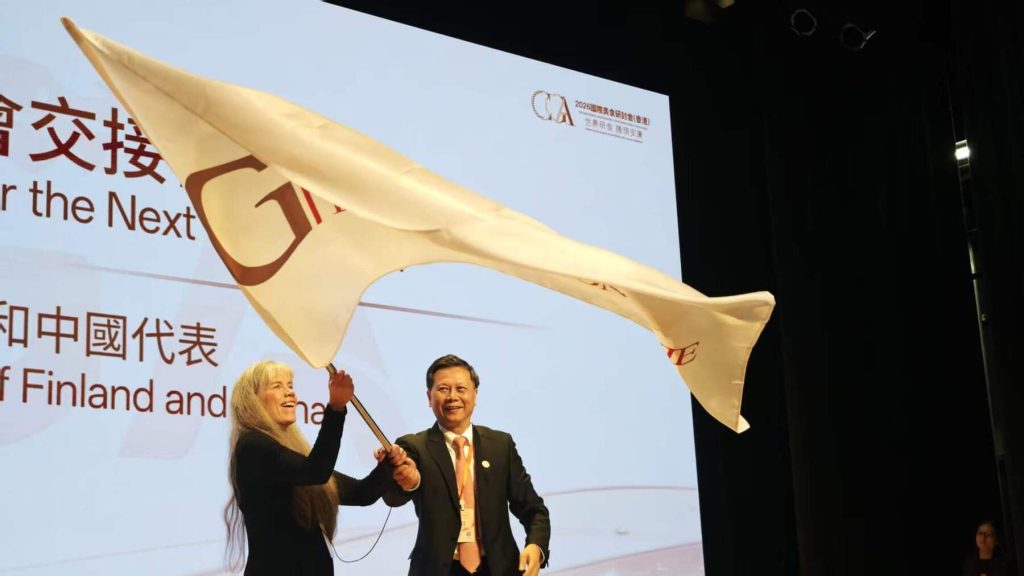
The handover placed continuity at the centre of the closing programme. The questions explored in Hong Kong — how gastronomy can promote wellbeing, responsible innovation, cultural heritage and the identity of places — will continue in a new European setting. From Hong Kong to Helsinki, the symposium strengthens an international network in which different gastronomic traditions can be studied, shared and developed through dialogue.
Very impressed with the deep movement towards a good nutrition, do not forgetting the flavor of food.
Congratulations